The Belt System in Karate: How It Motivates Kids to Succeed
Your child ties a white belt around their waist for the first time. That simple strip of fabric represents something profound: the beginning of a journey mapped out in colors. Unlike report cards that arrive quarterly, the belt system provides continuous, tangible markers of growth that children can literally wear.
Research from sport psychology confirms what karate instructors have observed for decades. Visible progress symbols dramatically increase persistence in young learners. The colored belt transforms abstract concepts like discipline and effort into something concrete.
This guide breaks down exactly how the belt progression works and why it creates such powerful motivation in children. You'll discover why this ancient ranking method outperforms modern gamification techniques.
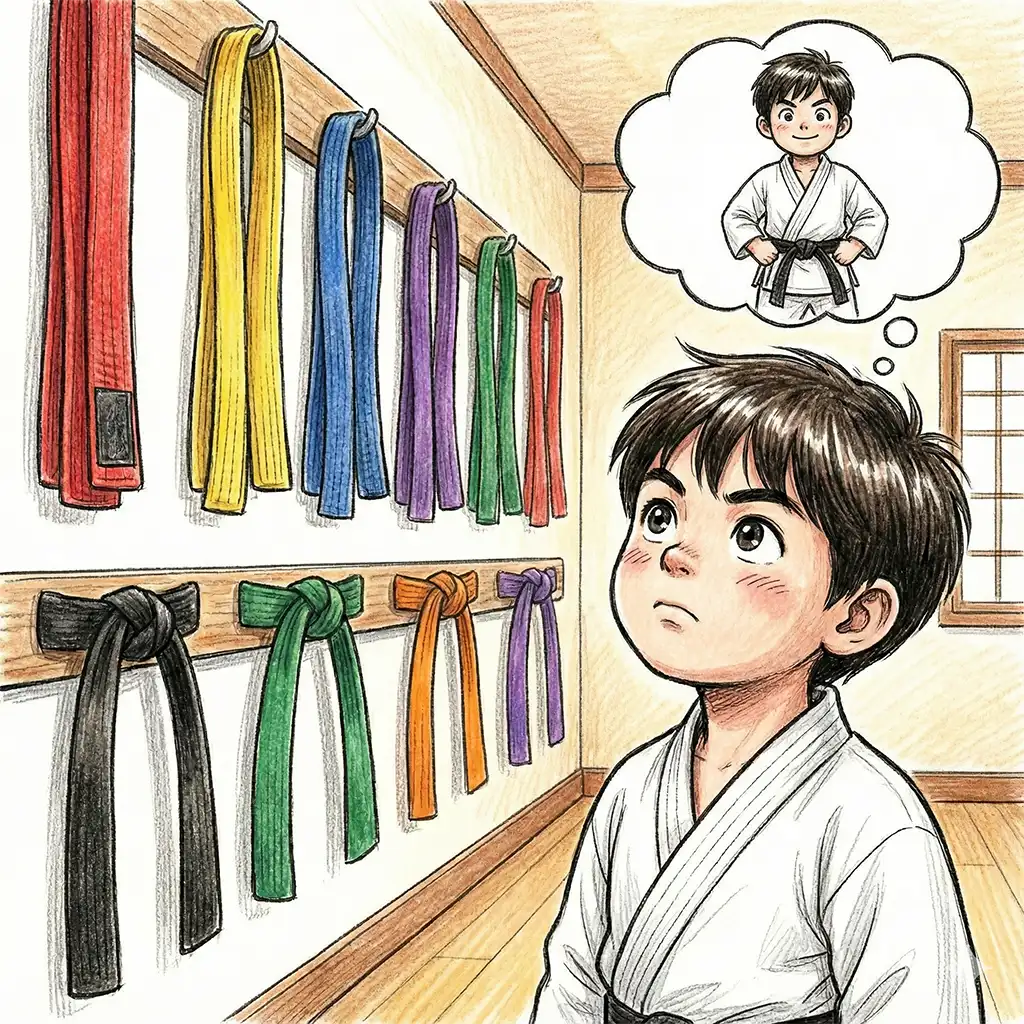
| Belt Color | Typical Timeline | Core Focus |
|---|---|---|
| White Belt | Entry Level | Basic stances and etiquette |
| Yellow Belt | 3-4 months | Fundamental strikes and blocks |
| Orange Belt | 6-8 months | Combination techniques |
| Green Belt | 10-14 months | Intermediate kata and sparring |
| Blue Belt | 16-20 months | Advanced techniques and teaching basics |
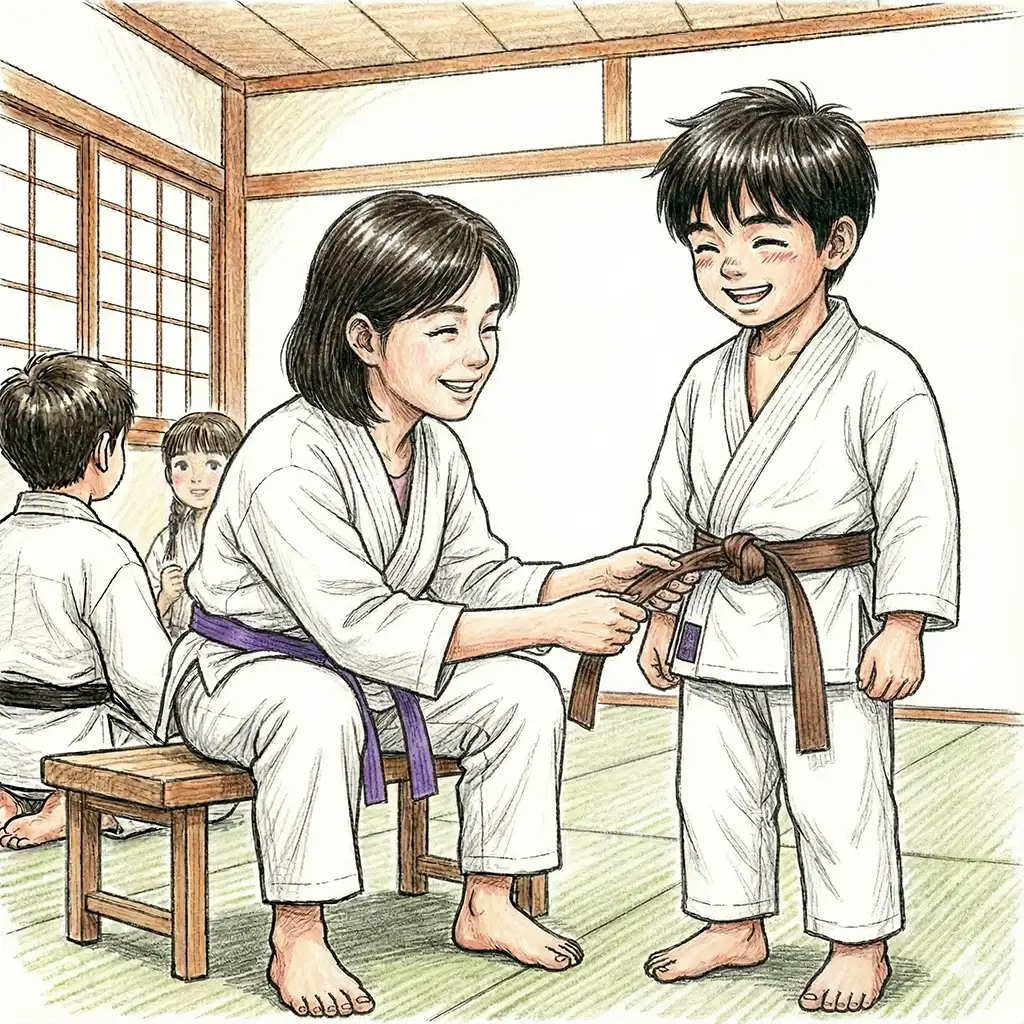
| Brown Belt | 24-30 months | Refinement and leadership |
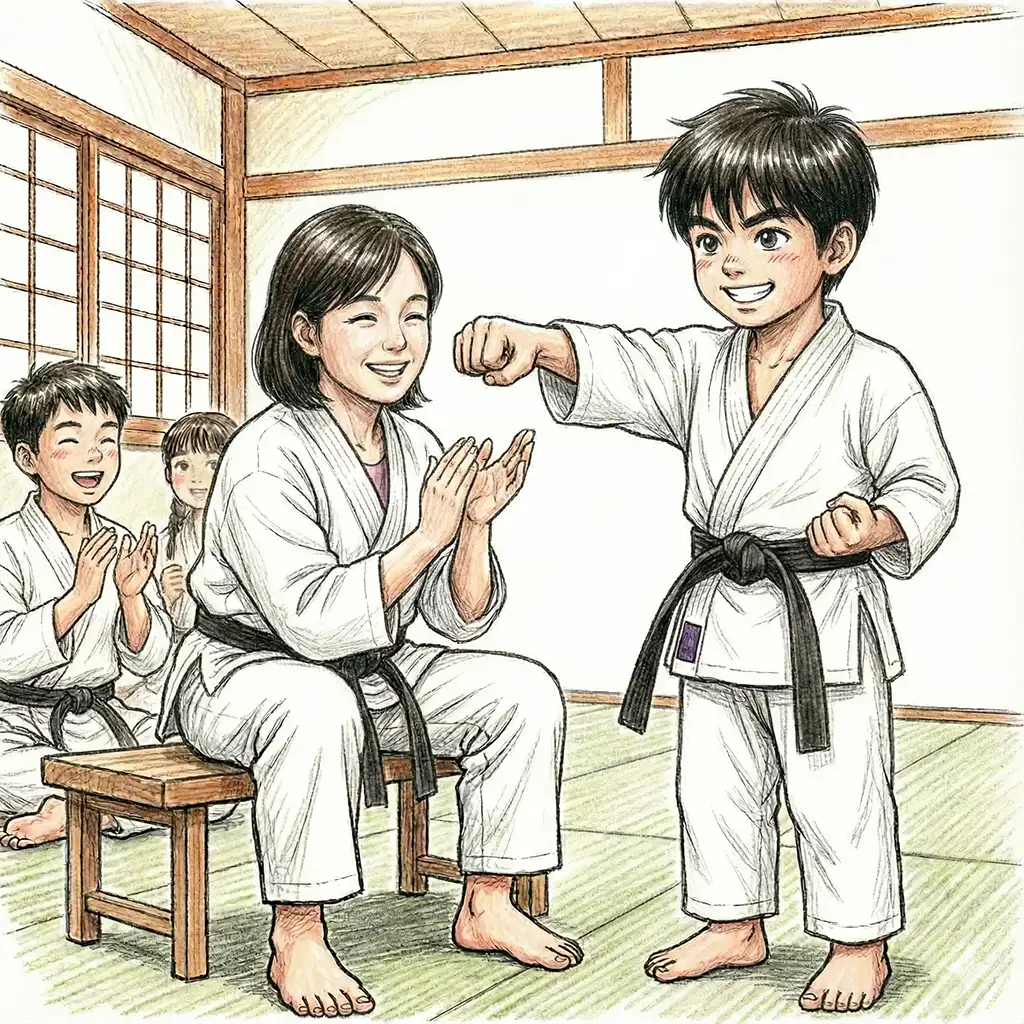
| Black Belt | 3-5 years | Mastery and continuous growth |
The Psychology Behind Colored Belts
The belt system taps into fundamental principles of human motivation that psychologists have studied extensively. Dr. Albert Bandura's self-efficacy research demonstrates that visible markers of competence significantly boost a person's belief in their ability to succeed. When a child earns a new belt color, they're not just receiving fabric. They're receiving validated proof of their capabilities.
This physical symbol works on multiple psychological levels simultaneously. The belt serves as a daily reminder of past success when the child dresses for class. It communicates achievement to peers without requiring verbal explanation. Most importantly, it creates anticipation for the next color in the sequence, driving continued effort and engagement with training.
Goal-setting theory supports this approach powerfully. Research published in the Journal of Applied Psychology shows that goals with clear visual endpoints produce 30% higher achievement rates than abstract objectives. The next belt color provides exactly this type of concrete target that young minds can focus upon.
What about the spacing between ranks? This matters tremendously. Most schools set belt tests 3-4 months apart for beginners, which research identifies as the optimal interval for maintaining motivation without creating frustration. Too frequent, and the achievement feels meaningless. Too rare, and children lose momentum.
Intrinsic vs Extrinsic Motivation
Critics sometimes argue that belt systems create unhealthy external motivation. Children chase colors rather than genuine skill development, they claim. Experienced instructors know the reality differs substantially from this concern. The belt system actually bridges external and internal motivation beautifully when implemented properly.
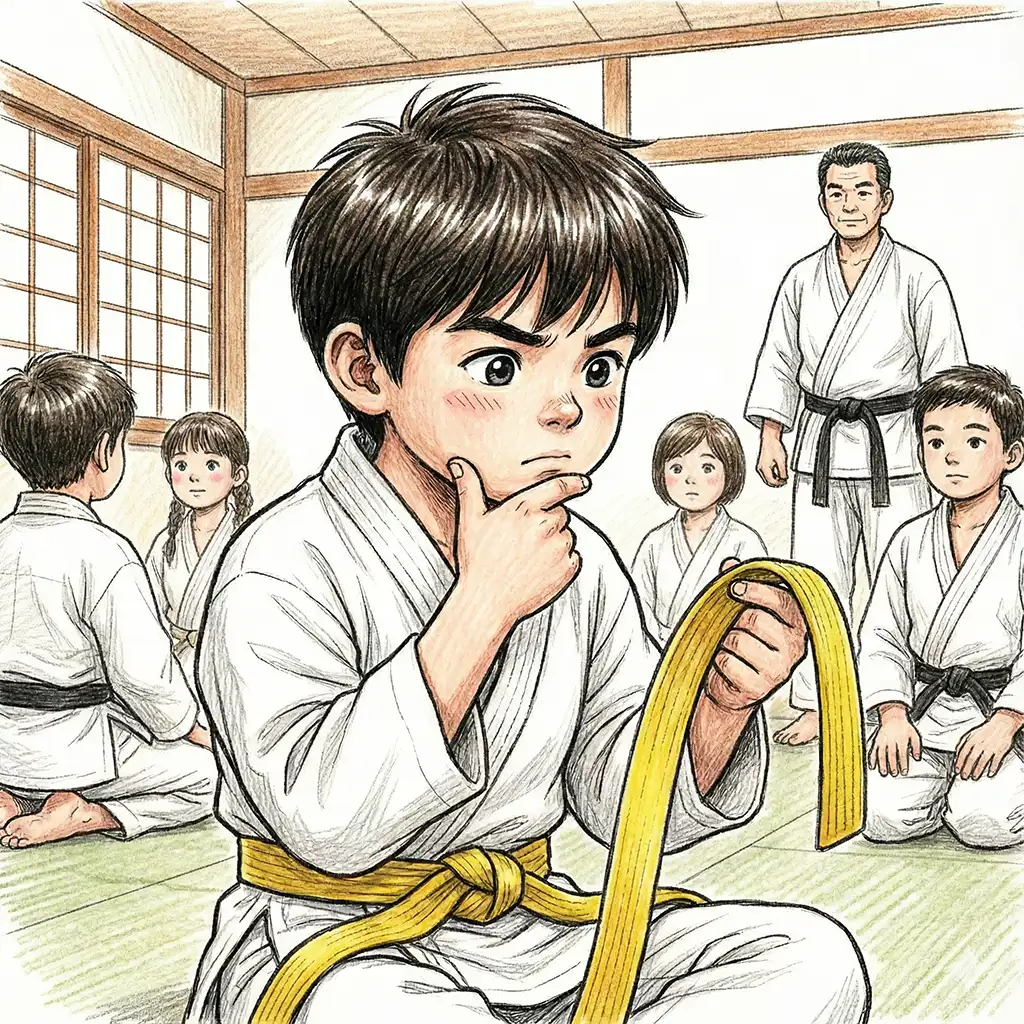
Initial motivation often starts externally. A child wants that yellow belt because it looks cool. But earning that belt requires developing real skills. The child must actually learn techniques, demonstrate discipline, and show improvement. By the time they receive the belt, intrinsic satisfaction has developed alongside the external reward. The belt becomes a symbol of internal growth, not a replacement for it.
This transition happens naturally over the belt progression. White and yellow belt students focus heavily on earning the next color. By green and blue belt, students typically report that they enjoy training itself, with belt advancement becoming a secondary consideration. The external motivator served as scaffolding that eventually becomes unnecessary.
How Belt Tests Build Character
The belt test itself teaches lessons no classroom can replicate. A child stands alone on the dojo floor, facing their instructor and often an audience of parents and peers. They must demonstrate skills under pressure, managing nerves while executing techniques they've practiced hundreds of times. This experience directly translates to academic tests, job interviews, and countless future high-pressure situations.
Preparation for belt tests teaches planning and sustained effort. Children learn they cannot cram the night before a test like they might for a spelling quiz. Karate techniques require muscle memory that develops only through consistent practice over weeks and months. This lesson about long-term preparation shapes academic habits and work ethic profoundly.
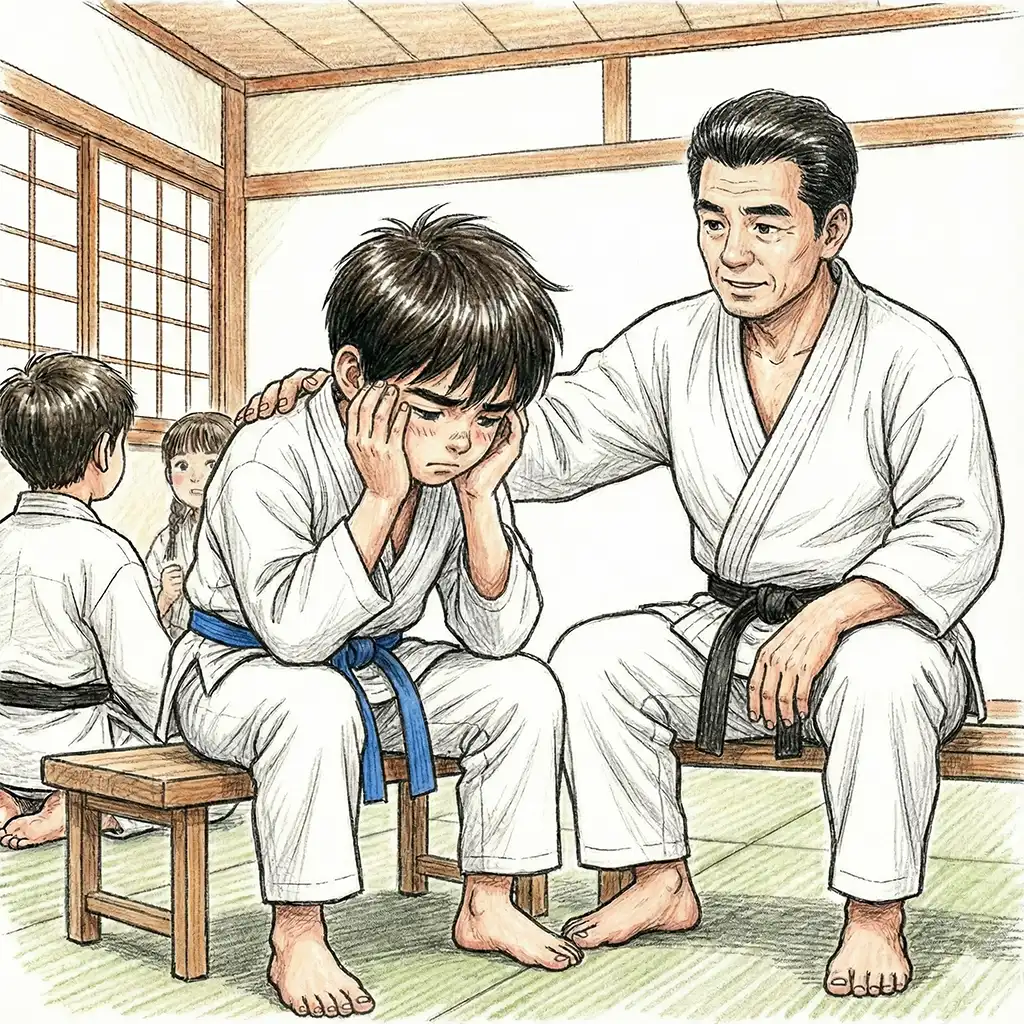
Here's something parents often overlook about the testing process. Not every child passes every test on the first attempt. Quality dojos maintain standards that ensure belts carry genuine meaning. When a child must retest, they learn perhaps the most valuable lesson: failure is not permanent. With additional practice and effort, they can overcome setbacks and achieve their goals. This resilience transfers directly to life challenges.
The character development extends beyond individual growth. Belt holders learn responsibility to lower ranks. A green belt student knows that white belts watch and emulate their behavior. This awareness cultivates leadership qualities and consideration for others that serve children throughout their lives.
The Journey from White to Black
The white belt symbolizes purity and beginning. In traditional philosophy, it represents snow covering a mountain—potential waiting to be developed. Children at this stage focus on basic stances, simple blocks, and fundamental etiquette. The curriculum emphasizes safety, respect, and building comfort in the dojo environment. Physical conditioning starts gently.
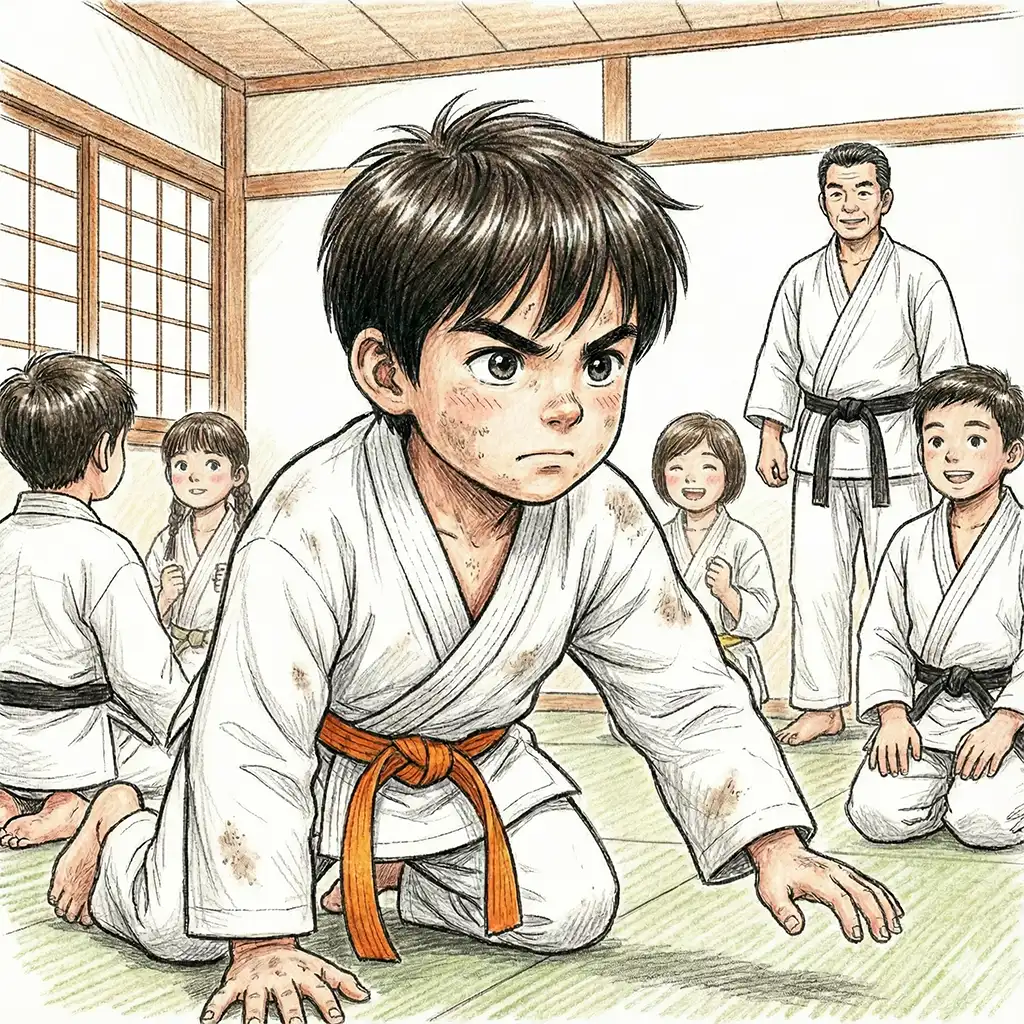
Yellow and orange belts mark the development phase. Students learn actual combat applications of basic techniques. Simple kata introduce choreographed sequences that develop muscle memory and coordination. Light contact sparring typically begins during these ranks, teaching children to apply skills dynamically rather than just performing them in isolation.
The intermediate ranks—green and blue—represent significant transformation. Techniques become more complex, combining multiple movements into flowing sequences. Students begin assisting with instruction of lower ranks, which reinforces their own learning while developing leadership skills. Physical conditioning intensifies, building strength and endurance that serves health throughout life.
Brown belt represents the final preparation for black belt. These students demonstrate near-expert technique across all fundamental areas. They lead warm-ups, assist extensively with teaching, and often mentor specific lower-ranked students. The brown belt period typically lasts longer than other ranks, ensuring thorough readiness for black belt responsibilities.
What Black Belt Really Means
Popular culture portrays black belt as the ultimate achievement, the end of the journey. Experienced martial artists understand the opposite: black belt represents the beginning of serious study. The Japanese term "shodan" literally translates to "first level." Everything before black belt was foundation-building. Now real learning begins.
This philosophy teaches children something profound about mastery. Goals are waypoints, not destinations. Achieving black belt opens new challenges rather than ending them. This mindset prepares children for a world where learning never stops, where graduation leads to new challenges rather than conclusions.
The numbered dan ranks above first-degree black belt continue this journey. Most children won't reach these advanced levels during childhood, but knowing they exist reinforces the lesson that growth has no ceiling. A child who earns black belt by age twelve has decades of continued advancement ahead.
Maintaining Motivation Through Plateaus
Every karate student encounters periods where progress seems to stall. Techniques that came easily at earlier ranks suddenly feel impossible. This phenomenon, well-documented in motor learning research, occurs when the brain consolidates complex skill patterns. The plateau precedes breakthroughs, though it doesn't feel that way during the experience.
The belt system helps children navigate these challenging periods. Specific requirements for each rank provide concrete focus when motivation wavers. A child struggling with a particular kick can channel frustration into perfecting other required techniques. Small victories accumulate even when major breakthroughs feel distant.
Stripe systems offer additional motivation between belt ranks. Many schools award small stripes on current belts for mastering specific requirements. A blue belt might earn stripes for mastering particular kata, demonstrating consistent attendance, or showing leadership qualities. These micro-achievements maintain momentum during longer intervals between major rank promotions.
Parents play crucial roles during plateau periods. Acknowledging effort rather than results, reminding children of past plateaus they overcame, and maintaining consistent training schedules all help. The belt hanging in the closet serves as tangible evidence that persistence pays off—proof the child earned through their own effort.
Celebrating Small Victories
Wise instructors teach students to find victories beyond belt advancement. Executing a technique correctly for the first time. Helping a younger student understand a concept. Showing composure during a difficult sparring match. These accomplishments deserve recognition and celebration, building a mindset that values continuous improvement over periodic achievements.
Training journals help children track these small victories. Recording daily practice, noting improvements, and writing about challenges creates perspective that belts alone cannot provide. Looking back over months of entries shows progress that might otherwise go unnoticed, especially during plateau periods when advancement feels stalled.
Setting Your Child Up for Belt Success
Consistent attendance forms the foundation of belt progression. Most schools require minimum attendance hours between tests, typically 24-40 hours of training per rank. Missing classes creates gaps that slow advancement and can frustrate children who see classmates progressing faster. Prioritizing karate in family schedules communicates its importance to children.
Home practice accelerates advancement significantly. Even fifteen minutes daily reinforces class learning and builds muscle memory faster than sporadic longer sessions. Creating a dedicated practice space at home—even just a cleared area with a mirror—encourages regular repetition. Parents don't need martial arts knowledge; simply providing space and time demonstrates support.
Keys to supporting your child's belt advancement:
- Maintain regular class attendance, treating karate appointments like medical appointments that cannot be easily rescheduled or skipped for convenience
- Create dedicated home practice time, even brief daily sessions of fifteen minutes build significant cumulative benefit over weeks and months
- Communicate with instructors about progress and areas needing additional focus, opening dialogue helps address challenges early
- Celebrate effort and persistence rather than focusing exclusively on belt color achievements, building healthy long-term motivation patterns
- Avoid comparing your child's progress to classmates, as each child develops at their own pace based on age, physical development, and learning style
Communication with instructors helps identify specific areas needing attention. Most senseis welcome conversations about student progress and can provide targeted recommendations for home practice. This partnership between parents and instructors creates optimal conditions for advancement while ensuring children develop genuine skills rather than rushing through ranks superficially.
| Preparation Area | Requirements | Parent Role |
|---|---|---|
| Attendance | 24-40 hours minimum | Track and prioritize schedule |
| Technique Mastery | All rank requirements | Encourage home practice |
| Kata Knowledge | Current and previous forms | Provide space for rehearsal |
| Mental Readiness | Confidence and focus | Positive reinforcement |
| Physical Condition | Strength and endurance | Ensure rest before test day |
Beyond the Belt: Lasting Life Skills
The colored belts eventually fade and fray. Children outgrow them, replacing each with larger sizes as they advance. What remains permanent are the skills and mindsets developed through the belt progression. Goal-setting abilities, persistence through difficulty, performance under pressure—these capacities transfer to academic, professional, and personal challenges throughout life.
Adults who trained in martial arts as children frequently credit the belt system with shaping their approach to challenges. They describe breaking large goals into achievable steps, maintaining focus during long projects, and recovering from setbacks with renewed determination. The belt colors become metaphors they apply to all areas of life.
Physical fitness benefits compound over years of training. Children who progress through belt ranks develop strength, flexibility, and coordination that establish healthy movement patterns for life. The discipline of regular training often extends to other health habits, creating positive cycles that support wellbeing across decades.
Long-term benefits children carry from belt progression:
- Goal decomposition skills that break overwhelming objectives into achievable intermediate steps
- Resilience patterns developed through overcoming plateaus and occasional test failures
- Performance confidence built through repeated belt test experiences under pressure
- Long-term commitment capacity demonstrated through multi-year advancement to black belt
- Leadership abilities developed through mentoring lower-ranked students at higher belt levels
The belt your child wears today represents far more than their current karate rank. It symbolizes lessons learned, challenges overcome, and capacities developed that will serve them throughout life. Every color in the progression adds another layer to a foundation built for lifelong success.
Frequently Asked Questions
Most reputable schools do not allow rank skipping because each belt level builds specific physical and mental foundations that rushing would compromise.
The instructor provides specific feedback on areas needing improvement, and your child retests after additional practice—typically within four to eight weeks.
Different styles and organizations use varying color progressions, so a green belt at one school may represent different skills than green belt at another.
Pre-test nervousness is completely normal and actually beneficial, as learning to manage performance anxiety is one of the key skills belt testing develops.
Encourage them to complete their current belt cycle before making any decisions, as pushing through temporary frustration often leads to breakthrough moments.
Premium belts may last longer and hold knots better, but standard school-issued belts function perfectly well for children progressing through ranks.