Why Karate Power Isn't "Strength": The Biomechanics of Real Impact
The strongest person in your dojo probably doesn't hit the hardest. Watch any experienced sensei demonstrate a reverse punch and something becomes immediately apparent: devastating impact comes from somewhere other than muscle mass.
This paradox confuses beginners and fascinates scientists. A 60-kilogram karateka can generate more striking force than a 100-kilogram weightlifter. The difference lies in biomechanical efficiency—the orchestration of body segments that transforms muscular effort into focused impact.
Understanding these mechanics doesn't just satisfy curiosity. It revolutionizes training. Once you grasp why power works the way it does, you stop wasting time on exercises that build muscle without building impact.
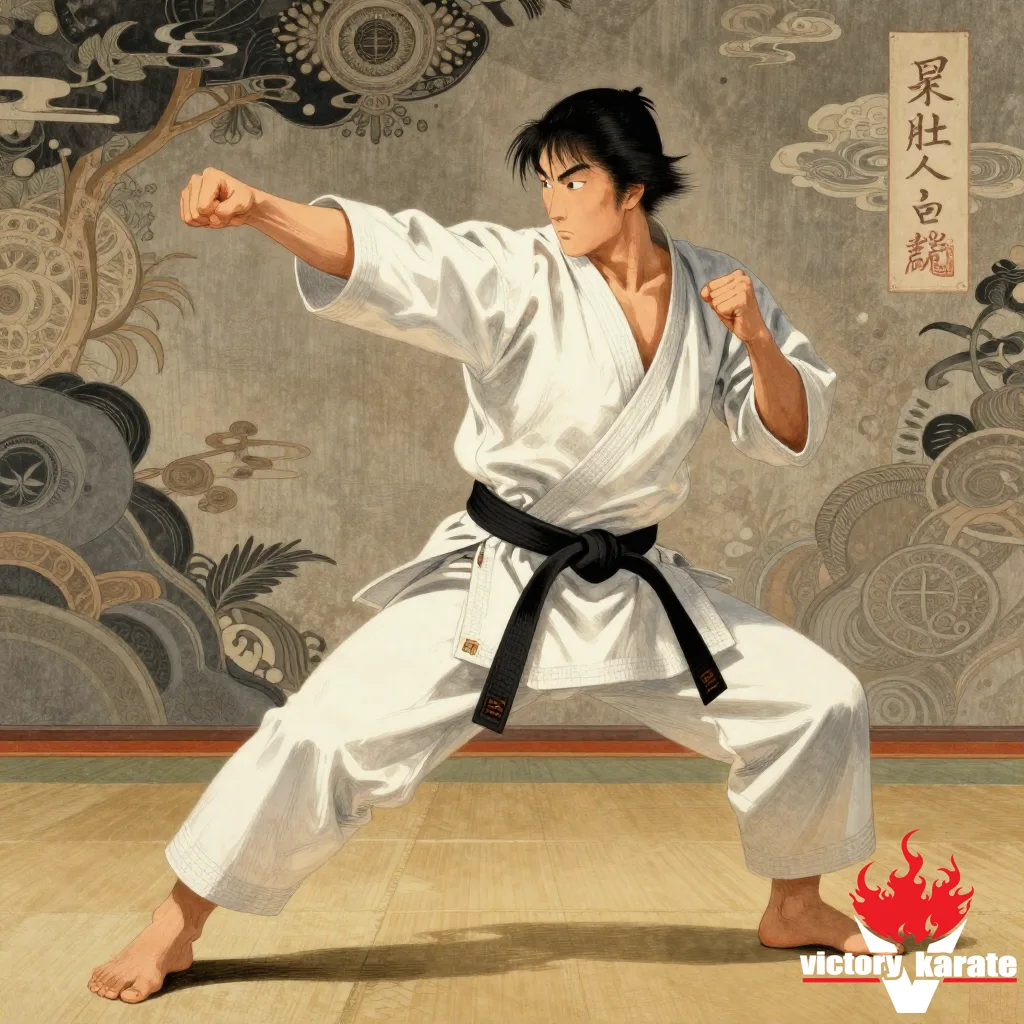
Strength vs Power: Key Distinctions
| Attribute | Muscular Strength | Striking Power |
|---|---|---|
| Primary measure | Force production | Force transfer efficiency |
| Speed component | Secondary | Critical |
| Body coordination | Isolated muscles | Kinetic chain integration |
| Training focus | Hypertrophy/max lifts | Timing and sequencing |
| Limiting factor | Muscle fiber recruitment | Technical precision |
The Kinetic Chain Explained
Your body operates as a series of connected segments—feet, ankles, knees, hips, spine, shoulders, elbows, wrists. Each segment can generate and transmit force to the next. When these segments activate in proper sequence, force accumulates. When they fire out of order, force dissipates.
Think of cracking a whip. The handle moves slowly. Energy transfers through progressively smaller segments until the tip breaks the sound barrier. Your reverse punch works identically. Ground reaction force travels through your legs, amplifies through hip rotation, accelerates through shoulder turn, and focuses through your arm extension.
Research from the Journal of Sports Sciences measured this phenomenon directly. Elite karateka generate peak hand velocities exceeding 14 meters per second—faster than most people can react. That speed doesn't come from arm strength alone. Hip rotation contributes roughly 37% of punch velocity according to biomechanical analysis.
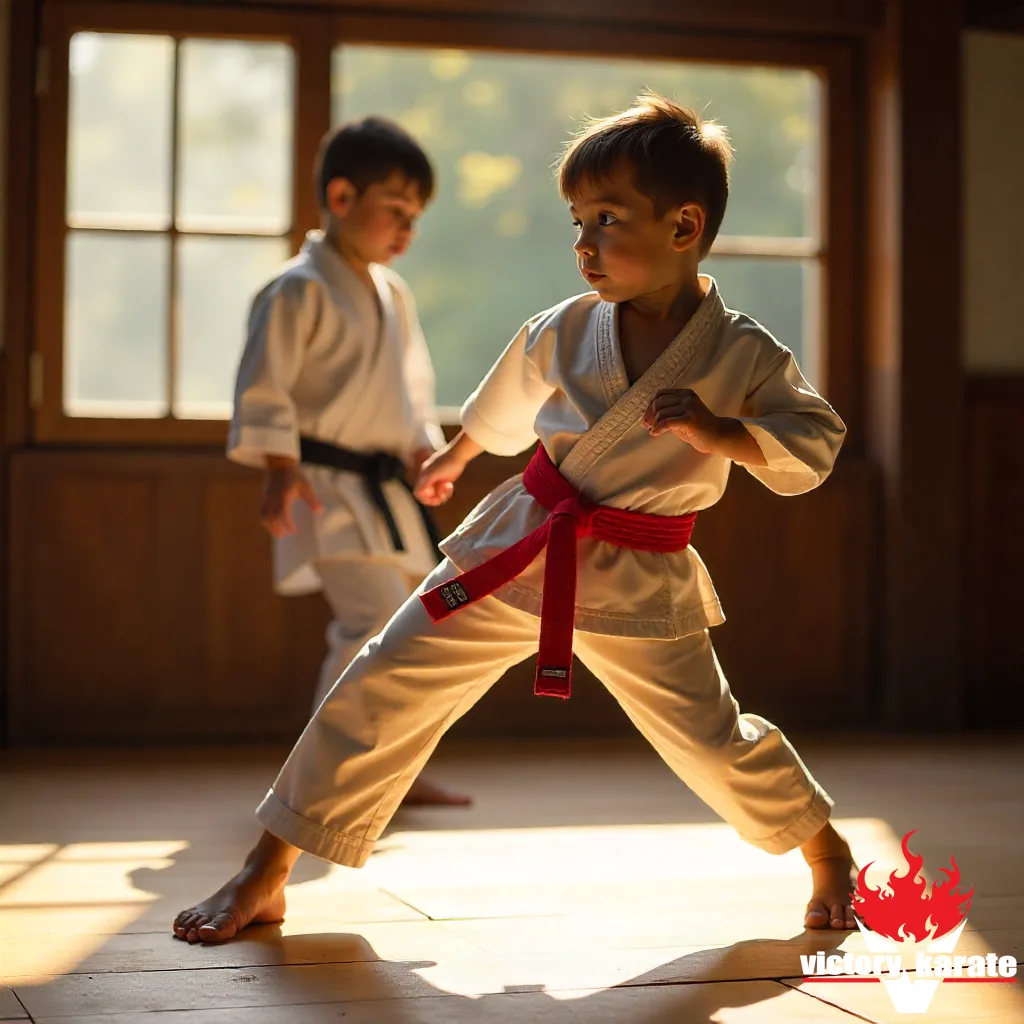
The kinetic chain also explains why tension destroys power. Contracted muscles resist movement. If your shoulders tense before your hips rotate, they create a bottleneck. Force gets stuck rather than flowing through. Relaxation until the moment of impact allows maximum energy transfer.
Sequential activation matters more than simultaneous activation. Each body segment should reach peak velocity just as the next segment begins accelerating. This timing creates summation of velocity—each segment adds its speed to the speed already developed by preceding segments. The result exceeds what any single segment could achieve alone.
Ground Reaction Force
Every action has an equal and opposite reaction. When you push against the floor, the floor pushes back. This ground reaction force provides the foundation for all striking power. Without solid grounding, your punch has nothing behind it—you're essentially pushing yourself backward as much as pushing forward into the target.
Stance mechanics become clearer through this lens. The back leg pressing into the floor at roughly 45 degrees creates both forward and rotational ground reaction force. Traditional stances like zenkutsu-dachi optimize this angle. The width and length of the stance determine how much force you can generate without losing balance.
Footwear matters more than casual practitioners realize. Thick-soled shoes absorb energy that should transfer through the floor. Barefoot training maximizes ground connection and proprioceptive feedback. When shoes become necessary, thin, flat soles preserve more ground reaction than cushioned athletic shoes designed for different purposes.
Hip Rotation Mechanics
The hips serve as the power generator in karate strikes. Your pelvis contains the largest, strongest muscles in your body—gluteals, hip flexors, and the muscles surrounding the hip joint. When these fire in coordinated rotation, they produce torque that smaller arm muscles cannot match.
Japanese karate texts use the term "koshi" to describe this hip-centered power generation. Direct translation as "hip" undersells the concept. Koshi encompasses the entire pelvic region, lower back, and the coordination between them. Mastering koshi transforms every technique.
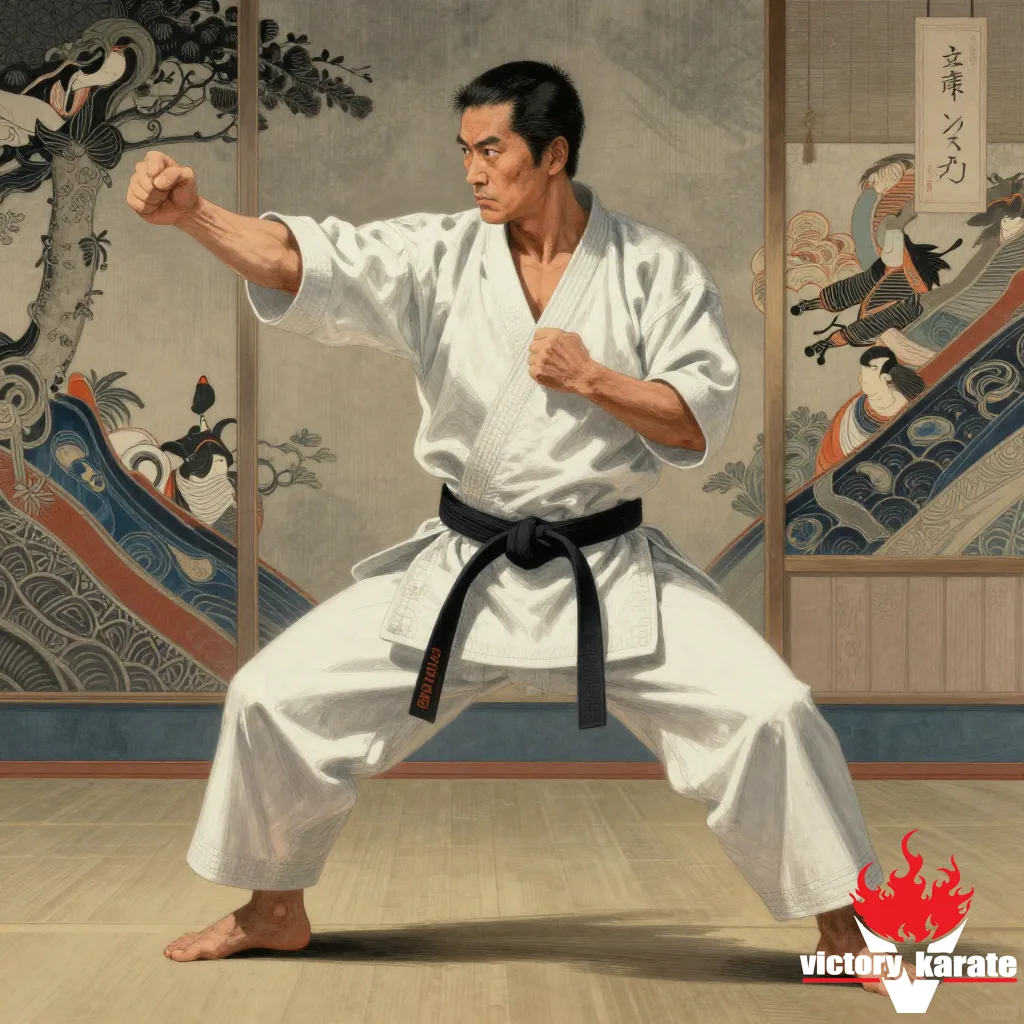
Two primary hip rotation patterns exist in karate. Jun-kaiten involves hips rotating in the same direction as the punch—the rear hip driving forward. Gyaku-kaiten reverses this, pulling the lead hip backward while the punching hand extends. Different techniques optimize different rotation patterns.
The timing of hip rotation determines whether power transfers efficiently. Initiating hip rotation too early means the arm plays catch-up, never synchronizing with maximum rotational velocity. Starting too late means arm extension finishes before hip power arrives. The sweet spot requires precise neuromuscular coordination developed through thousands of repetitions.
Hip flexibility directly limits rotation range. Tight hip flexors restrict how far the rear hip can drive forward. Restricted internal and external rotation reduces the arc available for power generation. Dedicated mobility work—not just static stretching but dynamic movement through full ranges—expands the workspace your hips can utilize.
Traditional training methods addressed hip development intuitively. Deep stances stretched hip structures while building strength. Repeated kata performance grooved rotation patterns into muscle memory. Modern understanding adds scientific precision to time-tested approaches, but the fundamental emphasis on hip mechanics remains unchanged.
The Role of Kime
Kime—the momentary full-body tension at technique completion—represents the final component of power generation. After energy flows through the kinetic chain with minimal resistance, kime creates a sudden stop that focuses all accumulated force into the target.
Without kime, your fist would bounce off or push through the target. The strike lacks penetration. With proper kime, the entire body's momentum concentrates at the impact point for a fraction of a second. This dramatically increases force delivery to a small area.
Elements that contribute to effective kime:
- Breath synchronization—sharp exhalation (kiai) activates core stabilizers that lock the torso
- Structural alignment—bones stack to create rigid force transmission from ground to fist
- Grip timing—the fist tightens only at impact, not during the punch trajectory
- Recovery readiness—tension releases immediately after impact to enable subsequent techniques
Measuring Impact Force
Sport science laboratories now quantify what masters taught intuitively. Force plates measure ground reaction. Motion capture tracks segment velocities. Instrumented targets record impact force and duration. This data confirms traditional teaching while revealing subtle refinements.
Elite karateka routinely generate punching forces exceeding 3,000 Newtons—roughly equivalent to 300 kilograms of force concentrated on the two front knuckles. Board breaking becomes less mysterious when you understand the physics. Wood has a breaking threshold. Proper technique exceeds it. Improper technique doesn't.
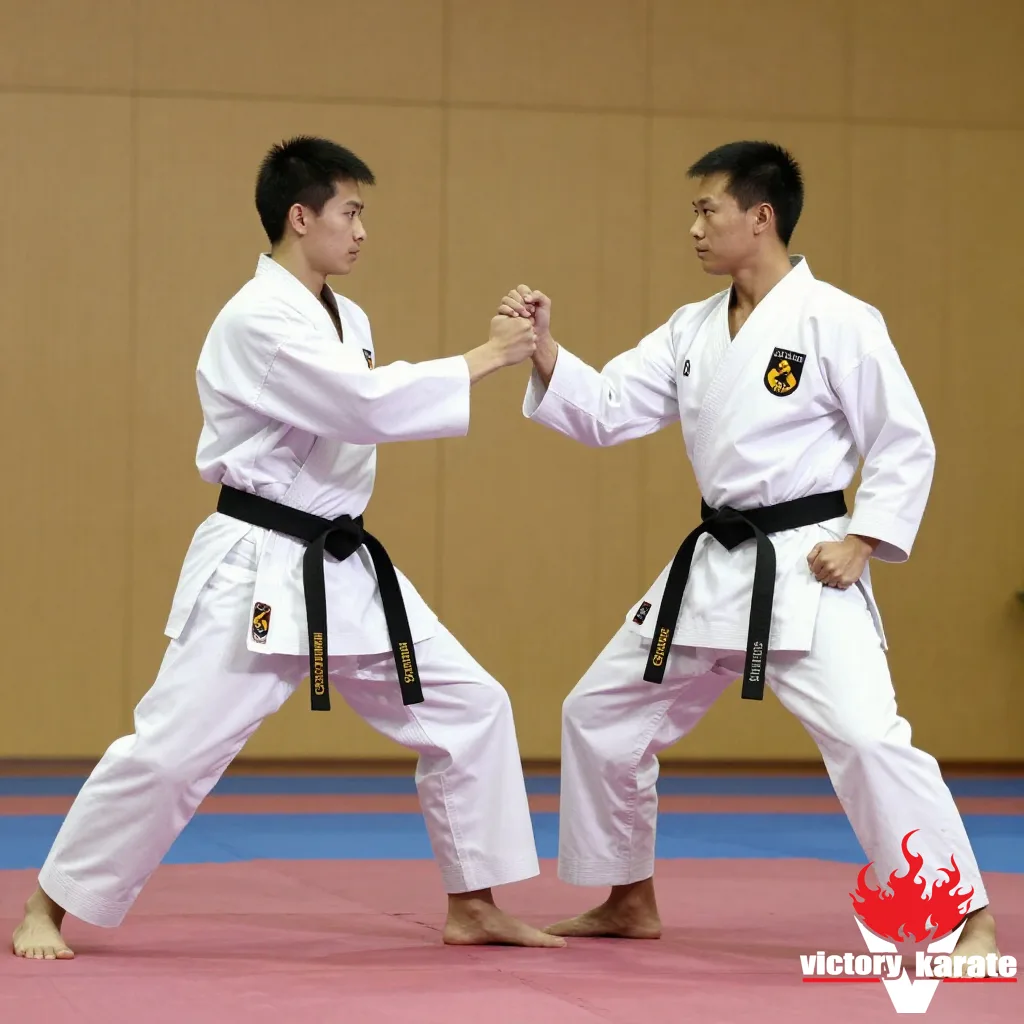
Impact duration matters as much as peak force. A punch landing over 50 milliseconds delivers force differently than one impacting for 10 milliseconds. Shorter impact duration—the hallmark of good kime—concentrates force into a smaller time window. The same total impulse creates greater peak pressure when compressed temporally.
These measurements explain why punching air develops form but not power. Without resistance, there's no kime point. The nervous system never learns when to create full-body tension. Heavy bag and pad work provide the impact feedback necessary for developing genuine stopping power rather than impressive-looking movement through space.
Common Power Leaks
Understanding how power generates also reveals how power leaks away. Most beginners lose force through predictable mechanical errors that feel natural but work against efficient energy transfer.
Rising during the punch represents perhaps the most common leak. When your center of gravity lifts, ground reaction force diminishes. The push comes from your body rising rather than driving forward. Keep weight pressing into the floor throughout the technique.
Shoulder leading before hip rotation breaks the kinetic chain. The arm can't wait for hip power that started late. This arm-punching pattern feels powerful because muscles strain, but force output measures far below integrated whole-body movement.
Over-rotation wastes energy and compromises structure. The hip should rotate to square with the target, then stop. Continuing past this point pulls the shoulder away from alignment, reduces penetration, and creates vulnerability. Maximum rotation doesn't equal maximum power.
| Symptom | Underlying Cause | Correction Focus |
|---|---|---|
| Pushing target back | No kime/slow delivery | Snap and tension timing |
| Puncher moves backward | Poor grounding | Stance and leg drive |
| Loud slapping sound | Surface contact only | Penetration and follow-through |
| Shoulder pain after training | Arm-dominant punching | Hip initiation drills |
| Loss of balance on impact | Over-rotation | Rotation endpoint control |
Training for Power vs Training for Strength
Conventional gym training builds muscle through progressive overload—gradually increasing weight forces adaptation. This approach develops strength but not necessarily striking power. Power requires speed under load, and heavy resistance training often sacrifices velocity for force.
Power-specific training uses lighter resistance at maximum speed. Medicine ball throws, plyometric exercises, and resistance band punches develop the fast-twitch muscle fiber recruitment that striking demands. The neural adaptations differ fundamentally from those produced by slow, heavy lifting.
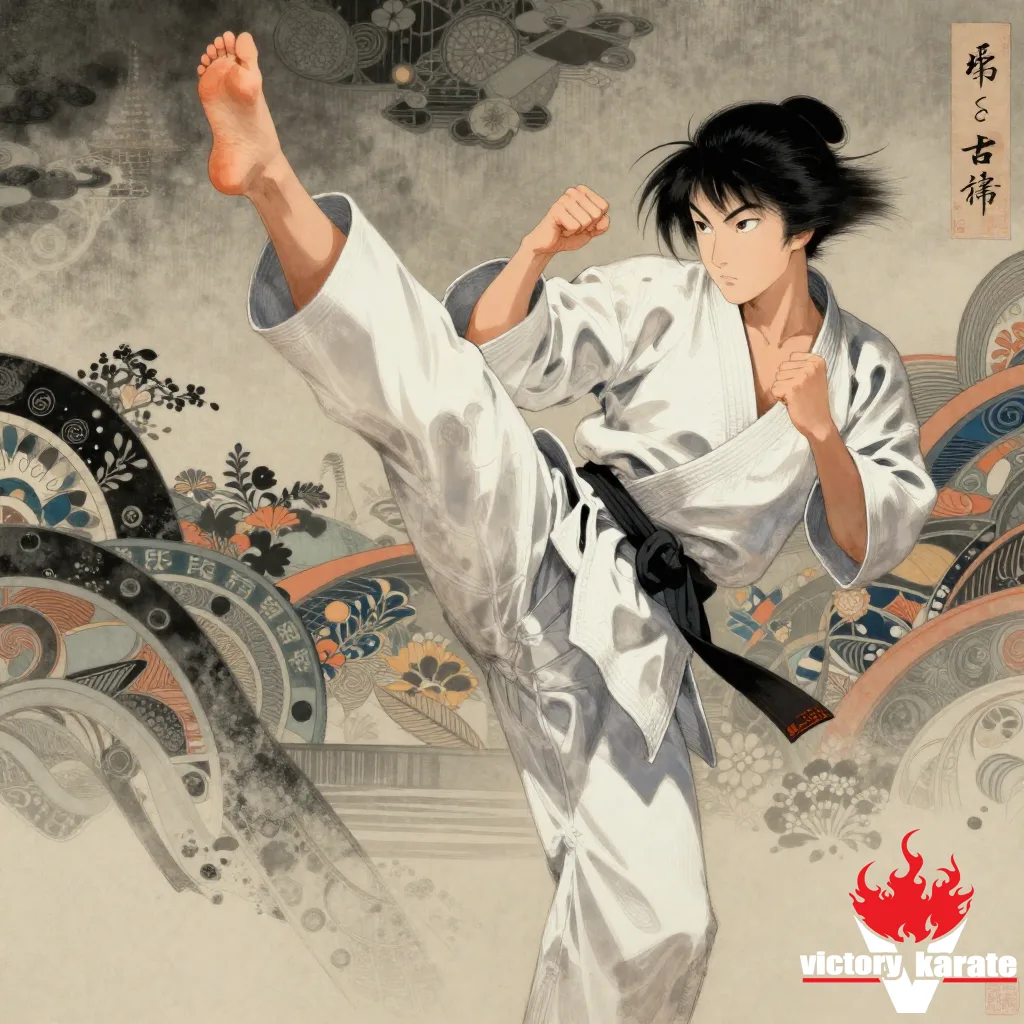
Effective power training methods for karateka:
- Rotational medicine ball throws against wall—develops hip rotation power directly applicable to punching
- Depth jumps and box jumps—build explosive leg drive for ground reaction force generation
- Resistance band punching with immediate free punching—trains acceleration through initial movement phase
- Heavy bag intervals with focus on technique under fatigue—maintains kinetic chain integrity when tired
The Makiwara Question
Traditional makiwara training developed power through repeated impact against a padded striking post. The post provides immediate feedback—weak technique produces weak impact and potential wrist pain. Strong technique rewards with solid thud and spring-back.
Modern sports science validates makiwara training's effectiveness while adding nuance. The conditioning benefits appear genuine—increased bone density, toughened connective tissue, improved proprioception. However, volume must stay moderate. Excessive impact training risks overuse injury that sidelines rather than develops karateka.
The psychological component shouldn't be underestimated either. Hitting an unmoving target builds confidence that translates into harder strikes under pressure. Many elite competitors maintain some makiwara practice despite access to sophisticated training equipment. The simplicity has value.
Applying Biomechanics to Your Training
Knowledge without application remains merely interesting. These biomechanical principles should change how you practice. Every technique becomes an opportunity to refine kinetic chain efficiency rather than simply accumulate repetitions.
Video analysis provides accessible feedback that previous generations lacked. Record your techniques from multiple angles. Compare against known exemplars. The differences often appear obvious on video while remaining invisible during practice. Frame-by-frame analysis reveals timing relationships impossible to perceive at full speed.
Slow practice develops precision that fast practice cannot. Work through techniques at quarter speed, feeling each segment's contribution to the kinetic chain. Where does tension appear too early? When does rotation begin relative to arm extension? Only after achieving proper sequencing slowly should speed gradually increase.
Partner feedback adds another dimension. Have training partners report what they feel when you hit pads or execute controlled contact. Pushy versus snappy impacts feel distinctly different to receivers. Their feedback often identifies problems invisible to the striker.
The strongest punch isn't the one that uses the most muscle. It's the one that wastes the least energy. Biomechanical efficiency transforms adequate strength into devastating power. That transformation happens through understanding applied consistently over time.
Science has validated what Okinawan masters discovered through generations of trial and refinement. Power comes from coordination, timing, and technique—not from gym-built muscles. This insight liberates practitioners from endless strength chasing and redirects effort toward the skills that actually matter.
Every training session offers opportunities to refine biomechanical efficiency. Basic techniques aren't basic—they're fundamental. The reverse punch you've thrown ten thousand times still contains room for improvement. Understanding why power works transforms rote repetition into purposeful refinement.
Frequently Asked Questions
No—weight training provides a strength foundation that power training builds upon, though power-specific exercises should receive priority in your overall program.
Most practitioners see noticeable improvement within 3-6 months of focused practice, though refinement continues throughout one's martial arts journey.
Efficient technique can largely compensate for size disadvantage, though at elite levels where technique approaches optimal, mass differences become more significant.
The principles overlap—kinetic chain efficiency, hip involvement, kime—but kicks involve different muscle recruitment patterns requiring specific training.
Excess muscle mass can actually impede striking speed and create tension that disrupts kinetic chain flow, explaining why bodybuilder physiques rarely correlate with striking excellence.
Genetics influence fast-twitch muscle fiber ratio and limb proportions, creating some natural variation, but technique optimization provides far greater improvement potential for most practitioners.