How to Choose the Right Karate School for Your Child in the Bronx: A Parent's Checklist
The Bronx offers dozens of martial arts schools, each claiming to be the best choice for your child. Navigating these options without a clear framework leads to confusion and potentially poor decisions that waste money and disappoint children.
This comprehensive guide provides the specific criteria Bronx parents need to evaluate local karate schools effectively. Not all programs deliver equal value or suit every child's needs.
Use this checklist to identify schools that will genuinely benefit your child's development rather than simply collecting tuition payments month after month.

| Evaluation Factor | Red Flags | Green Flags |
|---|---|---|
| Contract Terms | Multi-year mandatory contracts | Month-to-month options |
| Belt Advancement | Guaranteed promotion timeline | Skill-based advancement |
| Class Size | 20+ students per instructor | Under 12 students per instructor |
| Trial Period | No trial, immediate contract | Free or low-cost trial weeks |
Evaluating Instructor Credentials and Teaching Ability
A black belt alone doesn't qualify someone to teach children effectively. Many excellent martial artists lack the patience, communication skills, and child development knowledge needed to work successfully with young students. The best youth instructors combine technical expertise with genuine understanding of how children learn and grow through different developmental stages.
Ask about formal certifications beyond martial arts rank. Background checks, first aid training, and child safeguarding courses indicate schools that take youth instruction seriously. Many professional organizations offer instructor certification programs that address pedagogy specifically for teaching children aged four through eighteen.
Watch instructors interact with struggling students during class observations. Do they demonstrate patience and offer encouragement? Do they modify techniques for different ability levels? The way instructors handle frustrated beginners reveals more about teaching quality than any credential on the wall.
Technical demonstrations mean little if instructors cannot communicate effectively with seven-year-olds. Look for instructors who explain concepts using age-appropriate language, provide multiple demonstrations from different angles, and check for understanding before moving forward. Great teachers recognize when students are confused and adjust their approach accordingly.
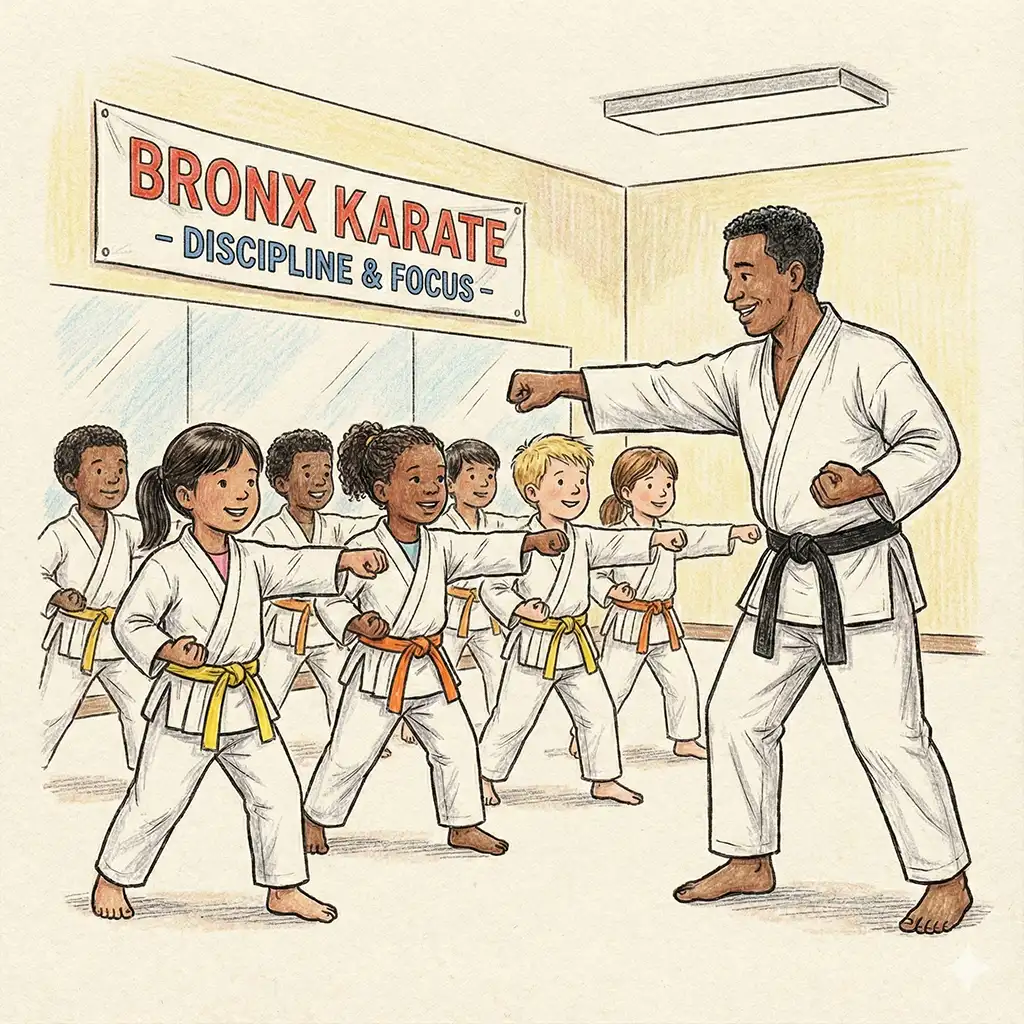
Questions to Ask About Instructor Qualifications
Don't hesitate to ask direct questions about instructor backgrounds. Reputable schools welcome these inquiries because they have nothing to hide. Request information about teaching experience, continuing education, and specific training for working with youth. Schools that become defensive or evasive about credentials raise immediate concerns about their professional standards.
Ask how long instructors have been with the school. High turnover suggests problems with management, pay, or working conditions. Stable instructor rosters indicate healthy school environments and provide consistency that benefits student development. Children form important mentorship bonds with instructors that frequent staff changes disrupt.
Inquire about the head instructor's lineage and training history. Legitimate martial artists can trace their instruction through recognized teachers and organizations. Vague answers about self-taught techniques or unverifiable credentials should raise skepticism. The martial arts world maintains strong traditions of documented teacher-student relationships.
Assessing Facility Safety and Cleanliness Standards
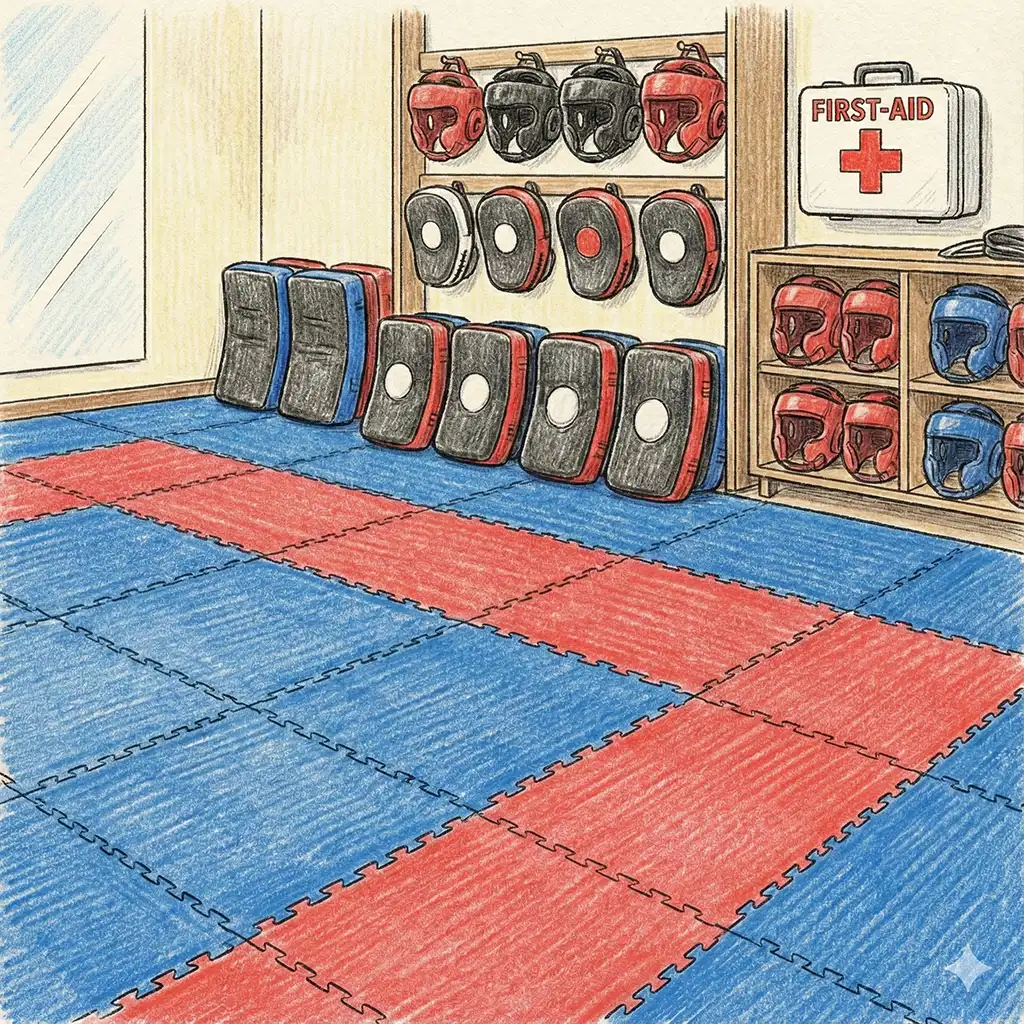
The physical environment directly impacts both safety and learning quality. Floor conditions matter enormously in martial arts—inadequate padding leads to injuries while dirty mats spread infections. Conduct a thorough inspection during your first visit rather than taking cleanliness on faith.
Check mat conditions carefully. Look for visible tears, worn spots, or areas where padding has compressed flat. Ask about cleaning protocols—how often are mats sanitized and with what products? Skin infections spread rapidly in martial arts environments where students have close physical contact. Quality schools clean mats daily and address visible dirt immediately.
The training space should have adequate room for the number of students typically present. Overcrowded classes lead to accidents when children practicing kicks collide with neighbors. Observe a regular class session to assess whether space constraints create safety issues during active training portions.
Temperature control deserves particular attention. Children exercising intensely in poorly ventilated spaces risk heat exhaustion. Summer months in the Bronx create challenging conditions for any indoor athletic facility. Ask how the school manages climate during extreme weather. Air conditioning isn't luxury in youth sports—it's a safety necessity during peak summer training.
Safety features to verify during facility inspection:
- Adequate mat coverage extending to wall boundaries
- Wall padding in sparring areas to prevent impact injuries
- Clear sight lines for instructors to monitor all students
- Proper ventilation and climate control for intense physical activity
- First aid supplies readily accessible and well-stocked
- Emergency exits clearly marked and unobstructed
- Separate viewing area for parents away from training zones
Observe bathroom conditions as indicators of overall facility maintenance standards. Schools that neglect restroom cleanliness likely cut corners elsewhere. Changing areas should provide appropriate privacy, particularly important for schools serving both children and adults in overlapping class schedules.
Understanding Curriculum Structure and Educational Approach
Legitimate karate schools follow structured curricula that build skills progressively. Ask to see written documentation of what students learn at each belt level. Vague answers about "just training" without clear learning objectives suggest disorganized programs that may not deliver meaningful skill development over time.
Inquire about the balance between physical technique, character development, and life skills instruction. The best youth programs integrate lessons about respect, perseverance, and focus into regular training rather than treating these as separate add-ons. Traditional martial arts philosophy emphasizes developing the whole person, not just physical capabilities.
Well, that sounds comprehensive on paper—but what does it look like in actual practice? Watch how instructors weave character education into physical training. Strong programs use teaching moments naturally rather than lecturing. When a student struggles with a technique, quality instructors connect that struggle to broader lessons about persistence and effort.
Age-Appropriate Class Structures
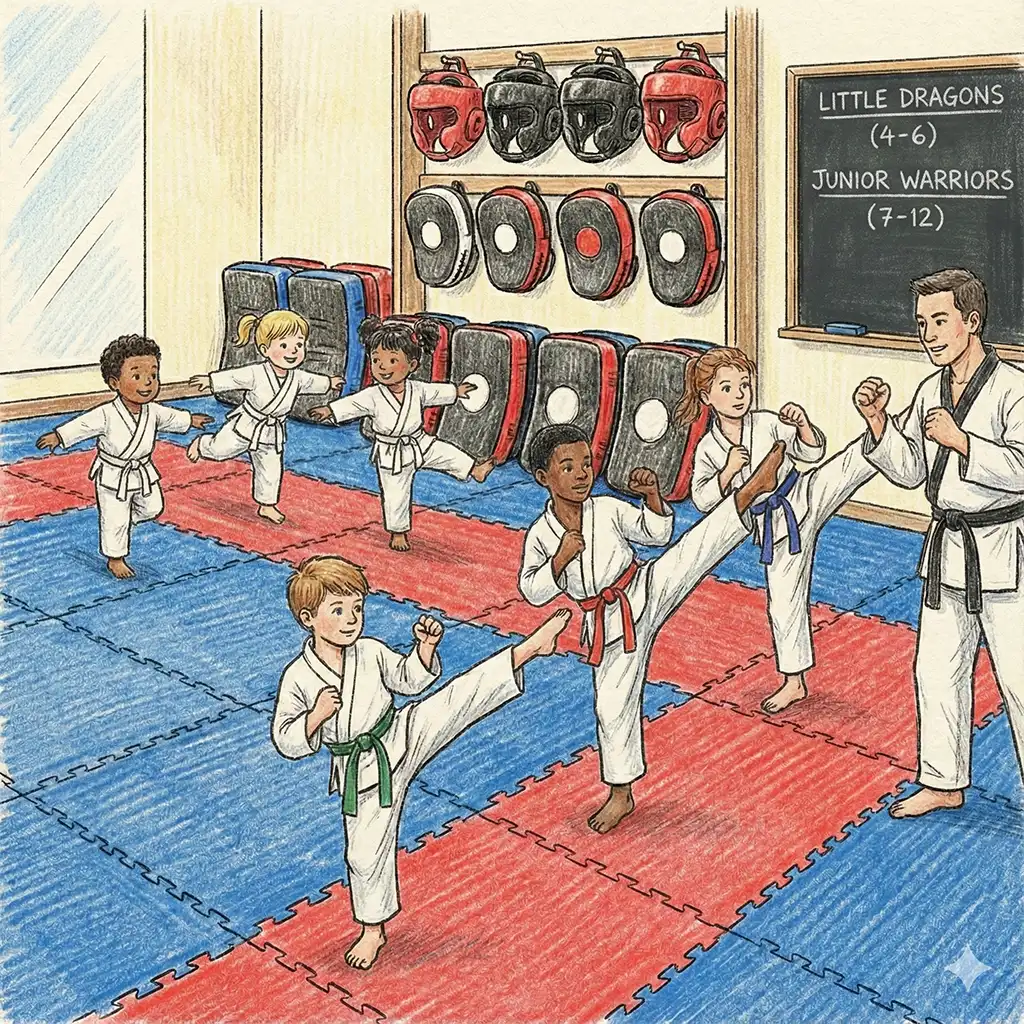
Quality schools separate children by developmental stage rather than simply offering one mixed children's class. A five-year-old and a twelve-year-old require fundamentally different teaching approaches. Schools that lump all ages together sacrifice educational effectiveness for scheduling convenience.
Ask how classes are structured by age and ability level. Look for programs offering separate sessions for preschoolers, elementary students, and teenagers. Within each age group, skill-based divisions allow appropriately challenging instruction. Advanced students benefit from training with peers at similar levels rather than constantly reviewing basics with beginners.
Class duration should match attention span capabilities. Forty-five minute sessions work well for children under seven, while older students can handle sixty to ninety minutes. Schools running identical class lengths for all ages may not be adapting instruction appropriately to developmental needs.
Competition focus varies significantly between schools. Some programs emphasize tournament preparation while others focus exclusively on personal development. Neither approach is wrong, but understanding a school's philosophy helps ensure alignment with your goals. Ask what percentage of students compete and whether competition is encouraged, optional, or mandatory for advancement.
Decoding Fee Structures and Hidden Costs
Monthly tuition represents only part of the true cost at many martial arts schools. Belt testing fees, required equipment purchases, tournament costs, and special program charges can dramatically increase expenses beyond initial quotes. Request a complete breakdown of all potential costs before committing to any program.
Be wary of schools requiring expensive long-term contracts, particularly those offering significant discounts for prepayment. These arrangements protect schools, not families. Circumstances change—children lose interest, families relocate, financial situations shift. Month-to-month options provide flexibility that benefits families even if monthly rates run slightly higher.
Hidden costs to ask about before enrolling:
- Belt testing fees and how frequently testing occurs
- Required uniform purchases and replacement costs
- Sparring equipment requirements and acceptable brands
- Annual registration or renewal fees
- Costs for special programs, camps, or workshops
- Tournament registration and travel expenses
Compare total annual costs across multiple schools rather than focusing solely on monthly tuition. A school with lower monthly fees but expensive mandatory testing may cost more than alternatives with higher base rates but reasonable additional charges. Calculate realistic total costs based on typical student progression through the belt system.
| Cost Category | Typical Range | Warning Signs |
|---|---|---|
| Monthly tuition | $80-180/month | Rates far below market average |
| Belt testing | $30-75 per test | Tests over $100 or monthly testing |
| Uniform | $40-80 basic gi | Required branded uniforms over $150 |
| Sparring gear | $100-200 full set | Must buy from school at premium |
Evaluating School Culture and Community Atmosphere
The social environment matters as much as the physical training. Observe how students interact before and after class. Do children seem genuinely happy to be there? Do families know each other and socialize naturally? Positive school cultures create communities that support child development beyond technical instruction.
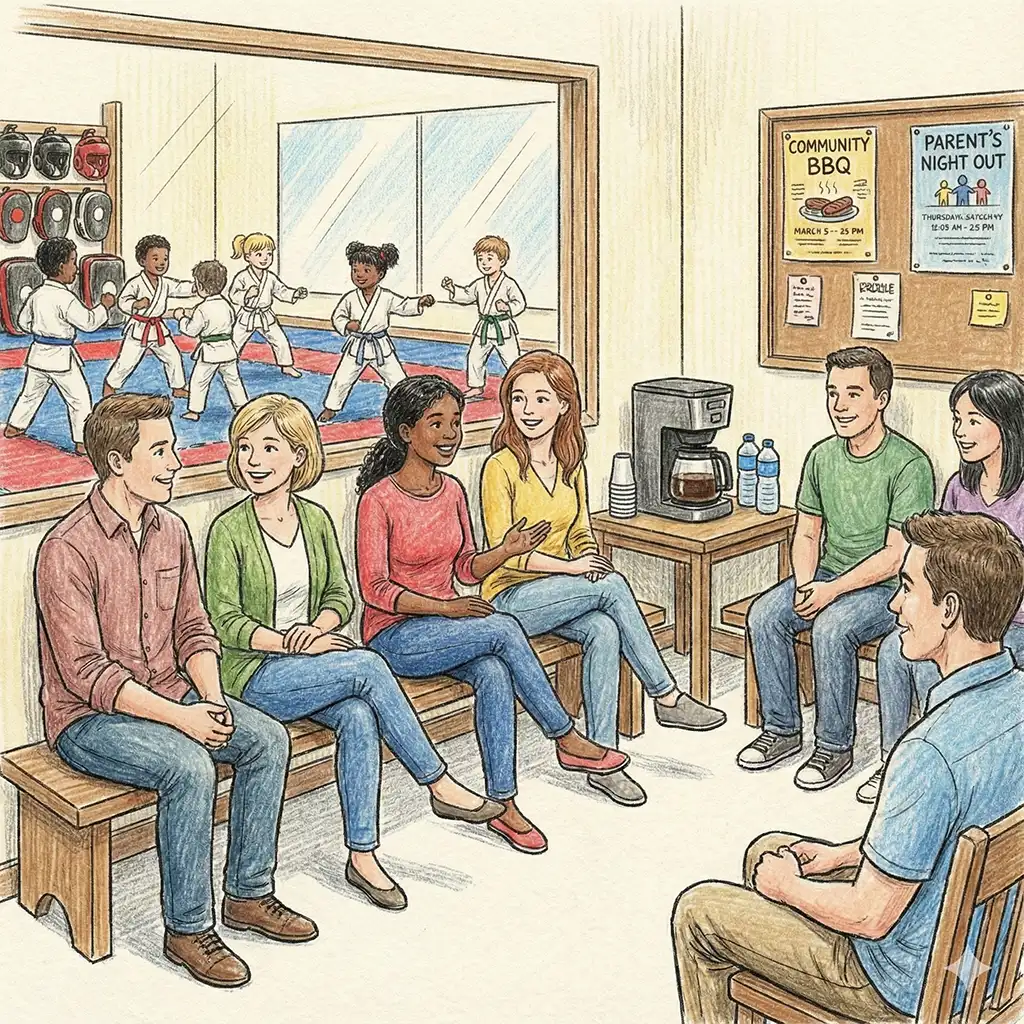
Talk with other parents during your observation visits. Ask about their experiences, how long they've been members, and whether they'd recommend the school to friends. Current families provide honest perspectives that schools themselves won't share. Listen for both enthusiasm and reservations in their responses.
Pay attention to how the school handles parent involvement. Some programs welcome family participation while others discourage it. Neither approach is inherently wrong, but consider which style matches your family's preferences. Schools with strong parent communities often provide additional support networks that benefit both children and adults.
Signs of Healthy School Culture
Look for schools where advanced students actively help beginners rather than ignoring them. This mentorship culture indicates values aligned with traditional martial arts philosophy. Schools where higher belts treat lower belts dismissively reveal problematic dynamics regardless of what mission statements claim.
Notice how instructors address mistakes. Corrections should come with encouragement and specific guidance, not public criticism or ridicule. The tone instructors use shapes the entire school atmosphere. Children learn to treat each other the way adults model treating them.
Diversity in the student body often indicates welcoming environments. Schools serving only one demographic may maintain unspoken barriers that exclude others. The Bronx's diverse population should be reflected in quality neighborhood schools that serve the whole community equally without favoritism.
Observe retention patterns by asking how long typical students stay enrolled. High churn rates suggest dissatisfaction that current marketing materials won't reveal. Schools where families remain for years, progressing through belt levels together, demonstrate sustained value that justifies ongoing investment. Ask to speak with families who have been members for multiple years.
Making Your Final Decision with Confidence
After gathering information from multiple schools, trust your instincts alongside objective criteria. The right school should feel right when you visit. Your child's reaction matters too—observe their comfort level and enthusiasm during trial classes. A technically perfect school that intimidates your child won't produce good outcomes.
Don't let sales pressure rush your decision. Quality schools welcome families taking time to evaluate options thoroughly. High-pressure enrollment tactics indicate schools prioritizing revenue over student welfare. Walk away from any school that won't allow adequate decision time or uses artificial urgency to force commitments.
Remember that no school is perfect. Weigh strengths against weaknesses based on your child's specific needs. A school with outstanding instructors but limited facilities might suit some children better than a beautiful gym with mediocre teaching. Prioritize the factors that matter most for your family's unique situation.
The decision you make now shapes years of your child's development. Taking time to evaluate carefully pays dividends in better outcomes, fewer wasted months in wrong-fit programs, and a positive introduction to martial arts that can last a lifetime. Your child deserves that investment of thoughtful research.

Frequently Asked Questions
Visit at least three schools to develop comparison baselines—more visits provide better perspective if your schedule allows.
Plan for twice-weekly classes minimum, as less frequent attendance produces significantly slower skill development and belt advancement.
Most schools offer sibling discounts ranging from 10-25%, and some provide family rates for parents training alongside children.
A slightly longer commute to a superior school typically produces better outcomes than convenient access to mediocre instruction.
Switching is possible though belt recognition varies between schools—some honor previous ranks while others require re-testing.
Many schools offer modified summer schedules with camps, intensive programs, or adjusted class times—ask specifically about summer operations.