Kata Isn't a Dance: How to Decode Bunkai Without Fantasy
The internet overflows with bunkai interpretations that would get you killed in an actual fight. Knife-hand blocks that become eye gouges. Low blocks morphing into groin grabs. Elaborate sequences requiring opponents to attack in precisely choreographed patterns. Fantasy bunkai has become an epidemic.
Real bunkai analysis demands different standards. Okinawan masters didn't create kata as performance art. They encoded practical fighting methods into solo forms that could be practiced anywhere, preserved across generations, and transmitted without revealing applications to casual observers.
This guide provides systematic methods for extracting genuine combat applications from traditional kata—methods grounded in fighting reality rather than wishful thinking about what movements might mean.
Fantasy vs Functional Bunkai Characteristics
| Fantasy Bunkai Signs | Functional Bunkai Signs |
|---|---|
| Requires attacker to freeze mid-technique | Works against resisting, moving opponents |
| Multiple steps for single defensive action | Simple, direct responses under pressure |
| Targets only available in specific positions | Robust against variations in attack angle |
| Looks impressive but never tested | Can be practiced with progressive resistance |
| One kata movement = one application only | Movements contain multiple viable applications |
Why Kata Encodes Rather Than Displays
Historical context explains why kata disguise their applications. During the Ryukyu Kingdom period and subsequent Japanese occupation, Okinawan martial arts existed in legal grey zones. Public display of fighting methods invited unwanted attention from authorities. Kata allowed training in plain sight—movements that appeared ceremonial contained lethal techniques visible only to initiated practitioners.
This encoding persists in modern kata even though secrecy no longer matters. Movements optimized for two-person application look different when performed solo. The pulling hand that appears to chamber at the hip actually controls an opponent's limb. The "block" that seems to deflect an attack actually strikes or manipulates. Understanding requires looking beyond surface appearances.
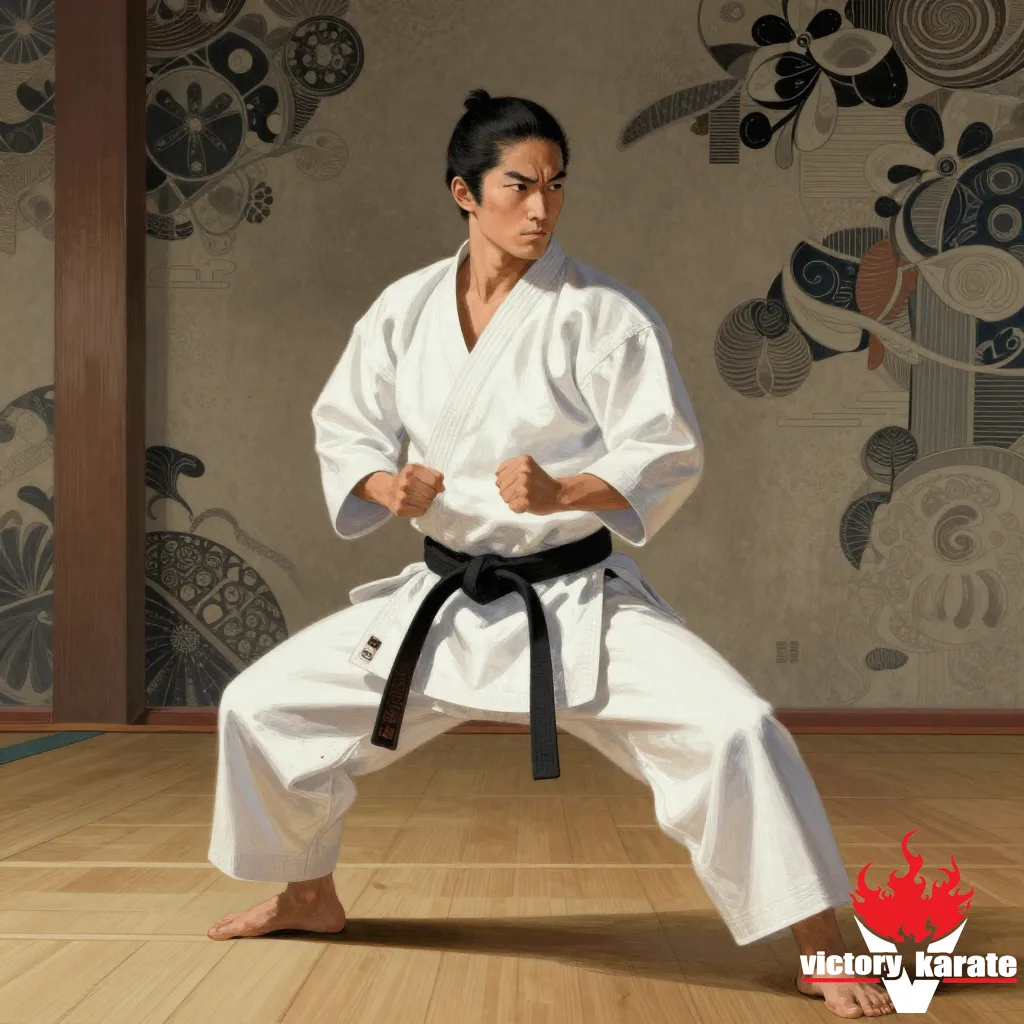
Multiple layers of meaning exist within single movements. A gedan barai might function as a block against a low kick in one context, a downward strike to a controlled arm in another, or a takedown setup in a third. Ancient practitioners needed versatile tools—kata provided them through intentional ambiguity.
The shift toward sport karate obscured these applications further. Kata became judged on aesthetic criteria—crisp technique, powerful kiai, perfect stances. Combat effectiveness became secondary to visual impression. Many practitioners now learn kata without any bunkai instruction, performing movements whose purposes remain mysterious even after years of practice.
The irony cuts deep. Students spend thousands of hours practicing kata yet never understand why the movements exist. They memorize sequences without meaning. The kata becomes precisely what critics claim it is—empty dance. But the fault lies not in kata itself. The fault lies in teaching methods that stripped application from form.
Recovery of bunkai knowledge requires reversing this trend. Some lineages maintained application teaching throughout. Others must reconstruct through analysis, cross-reference, and experimentation. Both paths lead toward the same destination: kata as living martial art rather than performance relic.
The Problem with Surface-Level Reading
Surface reading interprets kata movements literally. An upward motion becomes an "upper block." A downward sweep becomes a "low block." This approach generates interpretations that fail against real attacks because actual combat doesn't involve people throwing telegraphed single strikes and waiting for responses.
Consider the standard interpretation of age-uke. The rising arm supposedly blocks a downward strike. In reality, intercepting a committed attack with forearm-to-forearm contact rarely works—timing must be precise, and even successful blocks hurt both parties. More functional interpretations include the rising arm as a strike under the chin, an arm bar setup, or a clinch escape.
The disconnect between standard terminology and actual function appears throughout karate. "Blocks" that don't block. "Stances" that exist primarily for transitional manipulation. "Ready positions" that actually control opponent limbs. The vocabulary obscures rather than reveals. Intelligent bunkai analysis looks beyond labels to mechanics.
Principles for Realistic Bunkai Analysis
Certain principles separate functional bunkai from fantasy. These filters help evaluate proposed interpretations before investing practice time in techniques that won't work under pressure.
Bunkai reality-check principles:
- Habitual acts of violence—bunkai should address common attacks like grabs, pushes, haymakers, and tackles rather than classical martial arts techniques
- Close-range combat—historical self-defense happened at arm's length or closer, not at sparring distance where you can see attacks coming
- Limb control before striking—the pulling hand (hikite) almost always grips or controls something rather than simply chambering
- Simultaneous defense and offense—movements that appear sequential in kata often happen together against real attacks
- Angles matter—kata direction changes often indicate controlling opponent position rather than facing multiple attackers
Every proposed bunkai should pass pressure testing. Start slow with cooperative partners. Increase resistance gradually. If the technique falls apart against even moderate non-compliance, the interpretation needs refinement or abandonment. Combat effectiveness trumps theoretical elegance.
The Hikite Secret
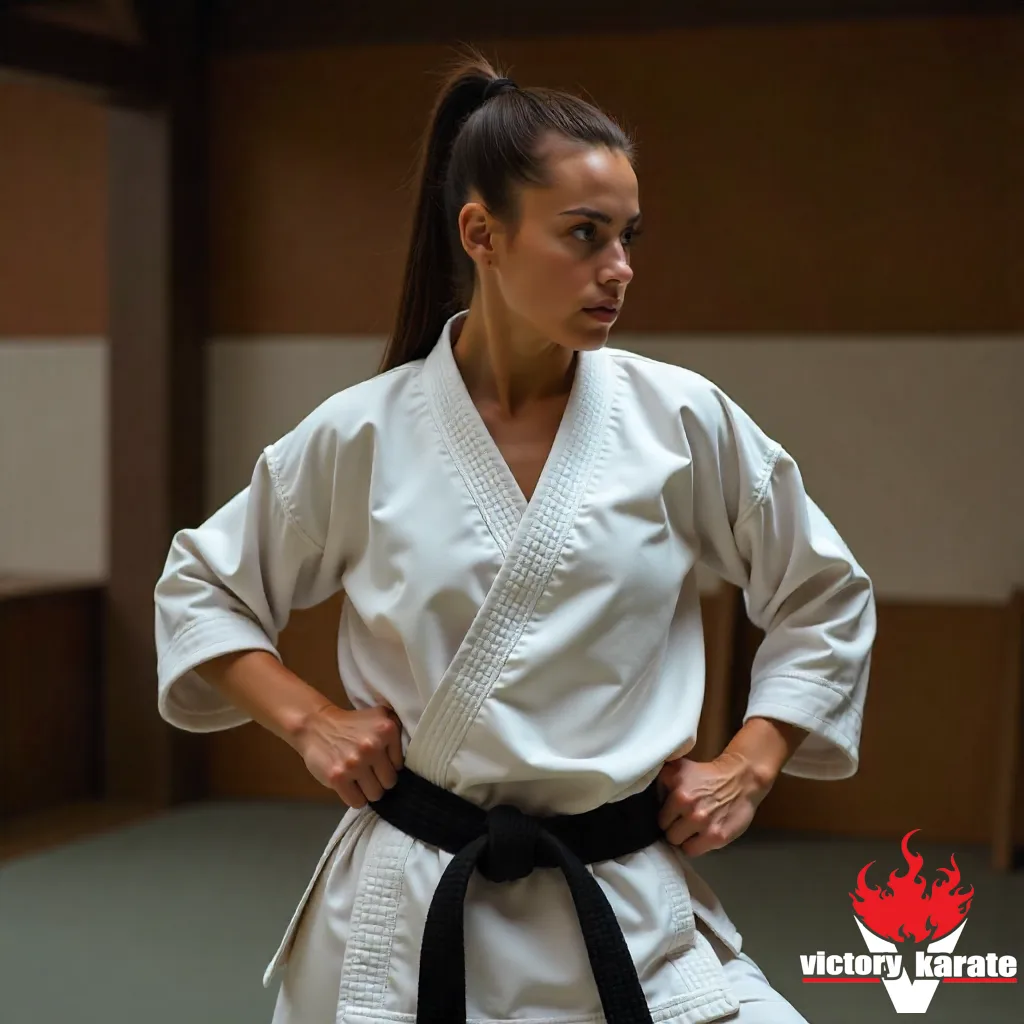
The pulling hand—hikite—provides perhaps the most important key to unlocking bunkai. In solo kata performance, this hand chambers at the hip apparently doing nothing. In application, hikite almost always controls an opponent's limb, clothing, or head. Understanding this transforms interpretation possibilities.
Picture a reverse punch with hikite. Surface reading sees one hand punching while the other returns to ready position. Functional reading sees a technique sequence: the pulling hand has grabbed the opponent's wrist, pulled it to your hip to off-balance them and expose their centerline, while the punching hand strikes an unguarded target. The punch's power multiplies because you're hitting someone pulled toward you.
This principle appears throughout kata. Whenever one hand chambers while another moves, ask what the chambering hand might control. Hair, collar, wrist, elbow, forearm—Okinawan self-defense assumed civilian clothing and close-range ambush scenarios where grabbing occurred naturally.
Historical training methods confirm this interpretation. Old-style karate practice involved considerable grabbing, pulling, and off-balancing—skills that modern sport karate de-emphasized in favor of clean striking exchanges. The kata preserved techniques that training methods abandoned.
The emphasis on hikite also explains why karate developed the chambered punch position that modern fighters criticize as impractical. With nothing to pull, chambering at the hip makes no sense—it withdraws your guard and telegraphs attacks. With an opponent's limb in that hand, chambering becomes essential to the technique's function. Context changes everything.
Double-hand techniques reveal this principle clearly. When both hands appear to chamber or position together, they're controlling something between them—an arm being manipulated, a head being set up for knee strike, a collar grip establishing throw leverage. The bilateral symmetry of many kata movements suggests two-handed control scenarios.
Stance Changes as Manipulation
Kata transitions between stances reveal manipulation and takedown mechanics when understood properly. The shift from front stance to back stance doesn't just reposition you—it pulls an attached opponent off-balance. Dropping into kiba-dachi creates leverage for throws. Cat stances prepare kicks but also load weight for sweeps.
Watch how weight distribution changes throughout kata sequences. These shifts make little sense as purely striking preparation. They make complete sense as body mechanics for manipulating someone you've grabbed. The kata teaches grappling transitions disguised as solo stance practice.
Direction changes deserve special attention. The standard explanation—turning to face additional attackers—rarely makes combative sense. More realistic interpretation views turns as angle changes relative to a single opponent. Moving to their flank, avoiding their power side, setting up throws that require specific positioning. The embusen (kata floor pattern) maps tactical maneuvering, not multiple opponent defense.
Common Kata Movements Decoded
Certain movements appear across multiple kata with consistent underlying applications. Understanding these common elements provides templates for interpreting unfamiliar sequences.
| Movement | Standard Name | Functional Applications |
|---|---|---|
| Gedan barai | Low block | Arm destruction, hammer fist, throw setup |
| Age-uke | Rising block | Uppercut, arm bar, neck crank |
| Shuto-uke | Knife-hand block | Neck strike, throw entry, grip break |
| Morote-uke | Augmented block | Elbow strike plus arm control |
| Kosa-dachi | Cross stance | Leg reaping position, throw completion |
Methodology for New Interpretations
Developing original bunkai requires systematic analysis rather than imagination. Follow a structured process to discover applications grounded in mechanical reality.
Step-by-step bunkai development process:
- Identify the movement sequence—isolate 2-4 connected movements from the kata for analysis
- Map the body mechanics—note weight shifts, hip rotation, hand paths, and direction changes
- Identify likely attacks—consider common grabs, pushes, and strikes that might initiate this response
- Apply hikite principle—determine what the pulling hand controls throughout the sequence
- Test against partner—practice the interpretation with increasing resistance levels
- Refine based on feedback—modify technique based on what works versus what fails
Cross-Referencing with Other Systems
Studying judo, jujitsu, and Chinese martial arts illuminates kata applications that pure karate study misses. Okinawan karate developed alongside these systems, borrowing and adapting techniques. Movements that seem mysterious in karate context often appear clearly in arts that preserved grappling traditions more explicitly.
Joint locks from traditional jujitsu show up throughout kata when you know what to look for. Throws from Chinese wrestling appear disguised as stances and transitions. The artificial separation between "striking" and "grappling" arts is historically recent. Original karate contained both.
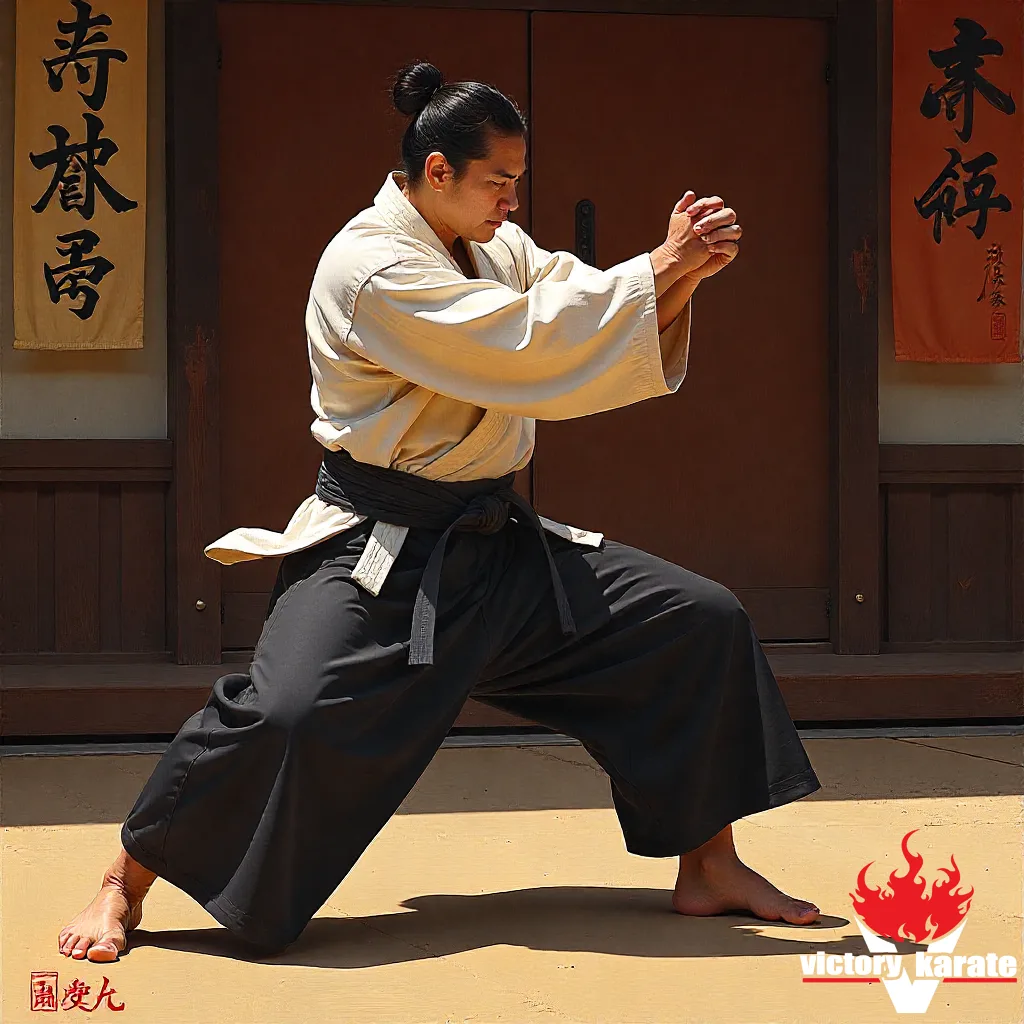
Wrestling experience proves particularly valuable for bunkai analysis. Many kata movements that seem inexplicable as strikes make immediate sense as clinch techniques, takedown defenses, or ground position escapes. The Okinawan practice of tegumi (traditional wrestling) informed kata development. Practitioners who only strike miss these connections entirely.
Filipino martial arts offer another useful lens. Their weapon-based approach reveals empty-hand applications that follow similar angles and principles. Some researchers argue Okinawan kata preserve influences from Southeast Asian trading partners. Whether historically accurate or not, the cross-reference illuminates possibilities.
From Analysis to Application
Understanding bunkai intellectually differs from being able to apply it. Knowledge must transform into skill through progressive training methods that bridge the gap between kata and combat.
Begin with predetermined attack drills. Partner throws specified attack, you respond with kata-based defense. Start slow and cooperative. The goal at this stage is grooving correct mechanics, not testing against resistance.
Progress to random attack selection from limited options. Partner chooses between two or three attacks; you respond appropriately. Decision-making under uncertainty develops pattern recognition without overwhelming cognitive load.
Advance to controlled sparring with kata techniques permitted. Initial rounds might restrict both partners to specific kata sequences. Gradually expand options while maintaining focus on kata-derived techniques rather than defaulting to sport karate habits.
Kata becomes genuinely meaningful when movements trigger instinctively during unscripted exchanges. This integration takes years of deliberate practice. Most practitioners never achieve it because they never attempt it—kata remains performance while sparring remains separate. Bridging this gap transforms empty form into functional martial art.
Document your bunkai discoveries. Record video of successful applications. Note which interpretations fail under pressure. Build a personal bunkai library that captures your evolving understanding. Future practice benefits from recorded insights that memory alone cannot preserve reliably.
Share interpretations with training partners who possess different backgrounds. Their perspectives reveal blind spots in your analysis. A judoka might immediately recognize throw mechanics you struggled to identify. A boxer might spot striking applications obscured by your grappling focus. Collaborative analysis produces richer understanding than solitary study.
The journey from surface kata to functional bunkai never truly ends. Each year of training reveals new layers in movements you thought you understood completely. This depth explains why masters practiced basic kata throughout their lives—not from lack of advanced material, but because basic kata contained more than any single lifetime could fully extract.
Frequently Asked Questions
They had specific applications in mind, though multiple valid interpretations exist because movements were intentionally designed with layered meanings.
Correctness matters less than functionality—if the technique works against resisting partners and fits the kata mechanics, it qualifies as valid bunkai.
Sport karate emphasis, lost transmission lineages, and the commercialization of martial arts all contributed to bunkai knowledge becoming rare rather than standard.
Yes, through systematic analysis, cross-training exposure, and honest pressure testing—though a knowledgeable instructor dramatically accelerates the process.
Bunkai awareness naturally refines kata performance—movements gain purpose and intensity when you understand their combat meaning.
Judges increasingly recognize bunkai understanding through movement quality, though competitive success without application knowledge remains possible.