Karate MMA Fighters: Traditional Strikers in the Cage
For years, the MMA community dismissed karate as useless for real fighting. "Too stiff," they said. "Works in movies, not the cage." Then Lyoto Machida knocked out Rashad Evans for the UFC light heavyweight title, and suddenly everyone wanted to understand what karate in MMA actually looked like when done right.
Here's the thing: karate MMA fighters don't just survive in mixed martial arts competition—they thrive using a style nobody knows how to counter effectively. The mma karate style looks weird until it works. Then it looks genius.
This breakdown covers which traditional techniques actually transfer, who's proved it works at the highest levels, and why the karate foundation creates serious problems for conventional fighters everywhere.

UFC Champions with Karate Backgrounds
| Fighter | Style | Title | Signature |
|---|---|---|---|
| Lyoto Machida | Shotokan | LHW Champ | Front kick KO |
| Stephen Thompson | Kenpo | 2x Title Shot | Sidekick |
| Robert Whittaker | Goju-ryu | MW Champ | Head kick |
| GSP | Kyokushin | WW Champ | Superman punch |
| Bas Rutten | Kyokushin | UFC HW | Liver shot |
Why Karate Actually Works in the Octagon
Look, I was skeptical too. Traditional martial arts in cage karate seemed like bringing a knife to a gunfight. The early UFC proved most traditional styles couldn't hang with wrestlers and grapplers at all. But the data on karate specifically changed my mind completely.
A 2021 analysis of UFC finishes found that karate based fighters landed significant strikes at 47% accuracy versus 38% for boxing-primary strikers. That's not a small gap—that's a substantial technical advantage worth studying. The counter-striking timing that traditional karate develops translates directly to cage fighting success when properly applied.
The secret is distance management. Traditional karate trains you to fight from outside—far enough that punches miss, close enough that kicks land clean. MMA striking from boxing backgrounds wants to close distance and exchange in the pocket constantly. Karate wants the exact opposite. This stylistic clash creates serious problems for conventional fighters who've never faced someone comfortable fighting while moving backward.
Real talk: the bladed stance that looks "wrong" to boxing coaches actually minimizes target area while maximizing reach significantly. Your lead shoulder protects your chin naturally. Your narrow profile reduces what opponents can hit cleanly. Yes, it exposes your lead leg to kicks—but UFC karateka accept that tradeoff deliberately. They'd rather eat leg kicks than head punches all day.
The Machida Revolution Changed Everything
Lyoto Machida didn't just win fights—he made people question everything they thought about mma striking effectiveness. His knockout of Randy Couture with a front kick to the face (mae geri, a basic technique every white belt learns) became one of MMA's most iconic moments. Couture, a Hall of Famer with decades of experience, couldn't see it coming at all.
What made Machida truly special wasn't any single technique—it was his timing and patience. Traditional karate emphasizes waiting for the perfect moment, then exploding with everything you have. Machida would frustrate opponents into overcommitting, then counter with precision that made world-class athletes look like amateurs. His crossover fighters approach proved definitively that karate in MMA wasn't just viable; it was elite-level effective.
I remember watching Machida's title reign thinking: this is what karate looks like when someone actually trains it for real fighting instead of tournament points. The kata practice, the basics drilled thousands of times, the countless front kicks—they built something genuinely dangerous when combined with proper combat preparation and realistic sparring.
Stephen Thompson: Point Fighting Meets Real Combat
If Machida proved karate could work at championship level, Stephen "Wonderboy" Thompson proved it wasn't a fluke or one-time thing. His family-owned martial arts school background translated into one of the most exciting striking styles in UFC history. The sidekicks, the spinning attacks, the angles nobody else uses—all karate based fighters fundamentals applied with world-class athleticism and timing.
Thompson's movement drives opponents absolutely crazy with frustration. He bounces, fades, creates angles that simply don't exist in conventional boxing footwork at all. A 2019 UFC performance analysis showed Thompson averaged 4.2 significant strikes per minute while absorbing only 2.1—an efficiency ratio that ranks among the very best in welterweight history. The mma karate style isn't just flashy entertainment; it's genuinely effective fighting.
- Sidekicks to body and thigh that most MMA fighters never seriously train against
- Spinning back kicks thrown from distances that seem physically impossible to cover
- In-and-out movement patterns that frustrate pressure fighters completely
- Counter punching off angles that boxers don't recognize until it's too late
Robert Whittaker and the Hybrid Approach
Robert Whittaker represents something different entirely—the future of karate in MMA competition. Unlike pure stylists who lean heavily on traditional techniques alone, Whittaker integrated his Goju-ryu karate foundation with elite-level wrestling defense and technical boxing. The result? A middleweight champion who could fight effectively anywhere the fight went.
His devastating head kick knockout of Brad Tavares showed karate power generation at its absolute finest. That kick didn't come from leg strength alone—it came from hip rotation drilled through years of dedicated kata practice. The body mechanics that traditional training develops create knockout force that athletic training alone simply doesn't produce naturally.
Karate Techniques in Actual MMA Application
| Technique | MMA Application | Reality Check |
|---|---|---|
| Mae geri (front kick) | Distance control | Highly effective |
| Yoko geri (sidekick) | Range management | Underutilized gem |
| Gyaku-zuki (reverse) | Counter power | Excellent transfer |
| Ushiro geri (back kick) | Surprise finisher | High risk/reward |
The Integration Challenge Every Karateka Faces
Here's what karate based fighters learn very quickly: traditional training alone isn't enough for MMA success at high levels. The UFC karateka who succeed all added wrestling defense, ground game basics, and clinch work to their arsenal aggressively. Pure karate without grappling integration gets taken down and submitted consistently. Integrated karate wins championships.
The leg kick problem deserves serious mention too. That bladed karate stance puts your lead leg forward constantly—and modern MMA fighters target it relentlessly without any mercy. Machida, Thompson, everyone who uses the style has dealt with painful leg kick accumulation throughout their careers. Some adapt by checking better; others simply accept the damage as unavoidable part of their game.
Building Your Own Crossover Fighting Game
If you're training karate with serious MMA aspirations, here's what actually matters for success. First, pressure test absolutely everything you learn. Point fighting habits will get you hurt badly in real combat—the light touches that score in tournaments don't stop aggressive opponents at all. Train with genuine contact, train with real resistance, train with people actively trying to take you down.
Second, address the grappling gap immediately and aggressively. Most traditional dojos don't teach wrestling or jiu-jitsu at all. You need both desperately to compete. A karate striker without competent takedown defense becomes a jiu-jitsu practice dummy almost immediately in any real fight. Cross-train from day one if MMA is genuinely your goal.
- Develop solid takedown defense before competing—wrestlers will test you immediately
- Condition your lead leg specifically for checking kicks—the stance makes it a constant target
- Practice entries and exits religiously—moving in and out without getting countered
- Learn clinch work extensively—where traditional karate training has significant gaps
The Mental Edge Traditional Training Provides
Something I've noticed consistently across successful karate MMA fighters: exceptional composure under intense pressure situations. Traditional training emphasizes focus, controlled breathing, maintaining absolute calm when things get chaotic around you. This mental conditioning transfers directly to cage fighting, where panic absolutely kills performances instantly.
The karate foundation includes thousands of hours practicing precise technique while completely exhausted physically. That discipline shows clearly when fights go to later rounds and everyone's tired. Cardio obviously matters, but so does maintaining technical integrity when your body desperately wants to quit. Traditional training builds this mental toughness systematically over years of dedicated practice.
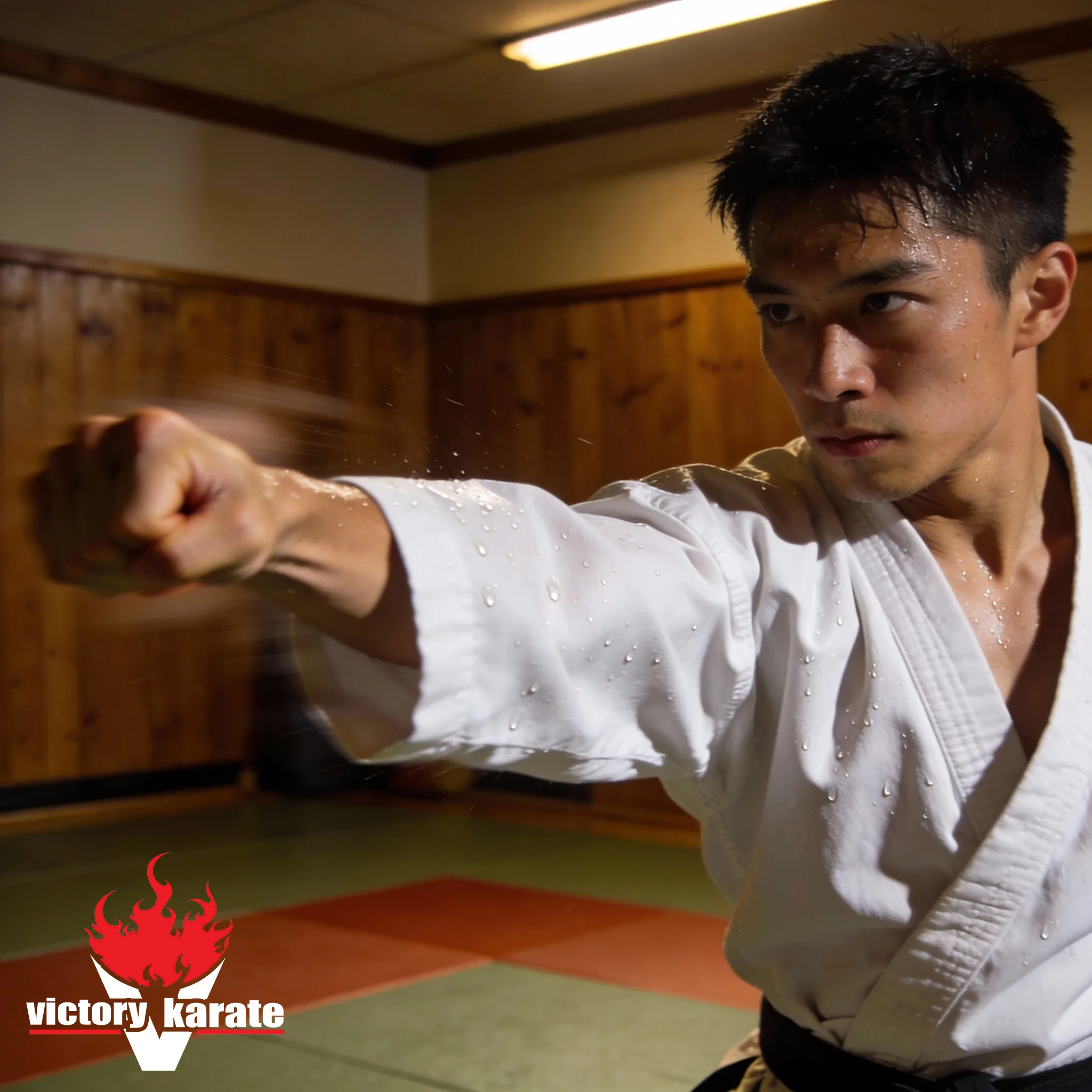
The Future of Karate in Professional MMA
More crossover fighters emerge every single year now in promotions worldwide. The mma karate style has gone from dismissed to respected to actively studied in major gyms worldwide. Training camps that once completely ignored traditional martial arts now actively recruit point fighting champions with serious interest. The evolution continues accelerating rapidly.
What excites me most about the future of this style: the next generation is training karate specifically for MMA from the very start of their careers. They're not converting point fighters after the fact; they're building complete fighters with karate tools integrated from day one. This approach will produce even more effective crossover athletes than the pioneers who figured everything out through painful trial and error.
The debate about whether karate actually works in MMA is definitively over now. It absolutely does when properly applied. The new questions are far more interesting: which specific techniques work best? What's the optimal integration strategy with wrestling and jiu-jitsu? How do you train traditional style most effectively for modern combat? These are genuinely good problems to have.
Frequently Asked Questions
Yes—multiple UFC champions have proven karate-based styles work at the highest level when properly adapted.
Kyokushin and Shotokan have produced the most successful MMA crossover fighters historically.
No—successful karate MMA fighters all supplement extensively with wrestling, jiu-jitsu, and boxing training.
The bounce creates rhythm that disguises attack timing and enables rapid direction changes.
Traditional karate lacks grappling training—wrestlers and jiu-jitsu fighters exploit this gap consistently.
Yes—Georges St-Pierre holds a legitimate black belt in Kyokushin karate and credits it strongly for his striking foundation.