Why Karate Is Better Than Team Sports for Shy Kids
Parents of shy children face a common dilemma when choosing physical activities. Traditional team sports promise social development but can overwhelm introverted personalities with their chaotic group dynamics.
Karate offers an alternative pathway that builds confidence without forcing uncomfortable social exposure. The structured, individual-focused nature of martial arts creates ideal conditions for shy children to flourish.
Understanding why martial arts work better for certain temperaments helps parents make informed decisions about their child's extracurricular activities.
| Factor | Team Sports | Karate |
|---|---|---|
| Performance Pressure | High - affects team outcome | Personal - individual focus |
| Social Complexity | Complex group dynamics | Structured interactions |
| Progress Visibility | Depends on team playing time | Clear belt progression |
| Skill Development | Variable based on position | Consistent individual growth |
Individual Progress Without Team Pressure
Team sports create a fundamental problem for shy children: individual mistakes affect everyone. The soccer player who misses a goal, the baseball player who drops a catch, the basketball player who loses the ball—these errors become public failures that impact the entire team's outcome. For sensitive, introverted children, this pressure can be paralyzing.
Karate eliminates this dynamic entirely. A student's progress or struggles affect only themselves. Mistakes during training don't cause teammates to lose games or championships. This removes the anxiety-inducing weight of responsibility for others' outcomes that crushes many shy children's willingness to participate at all.
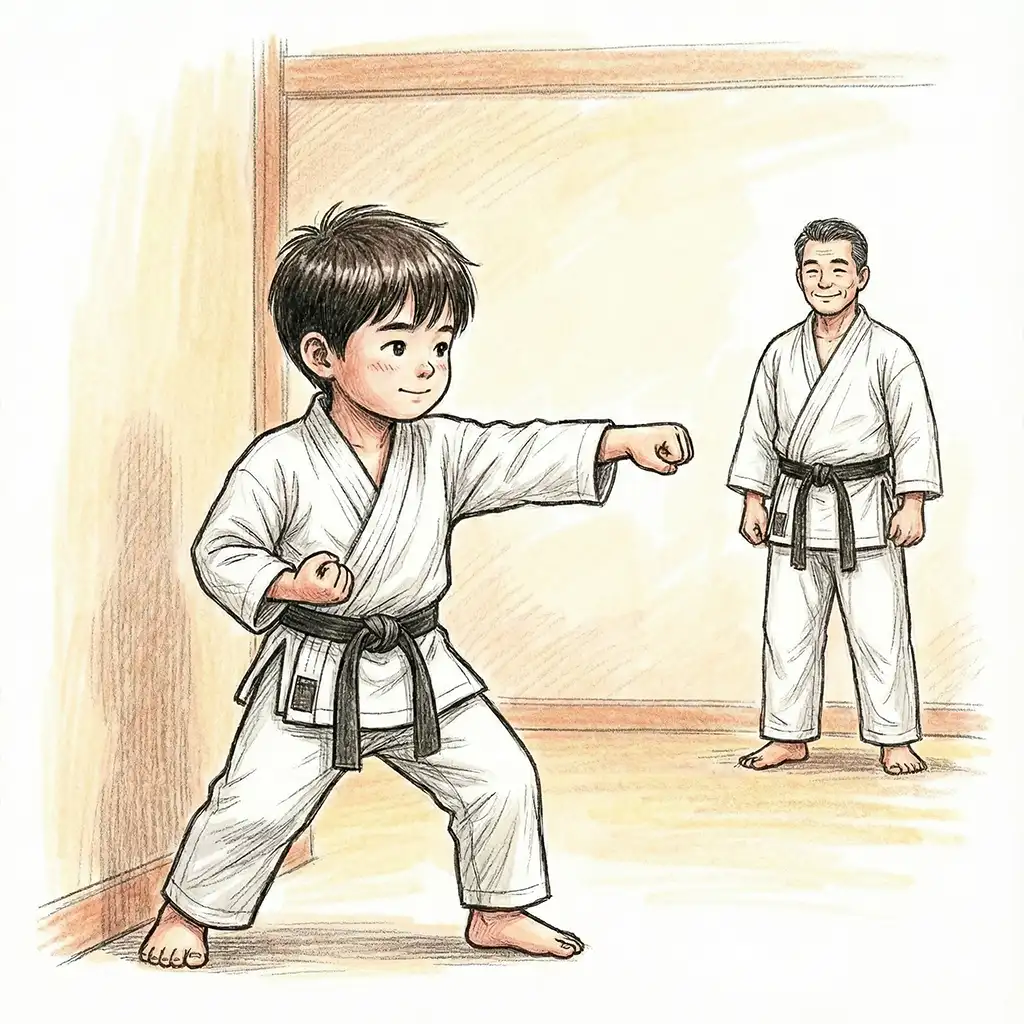
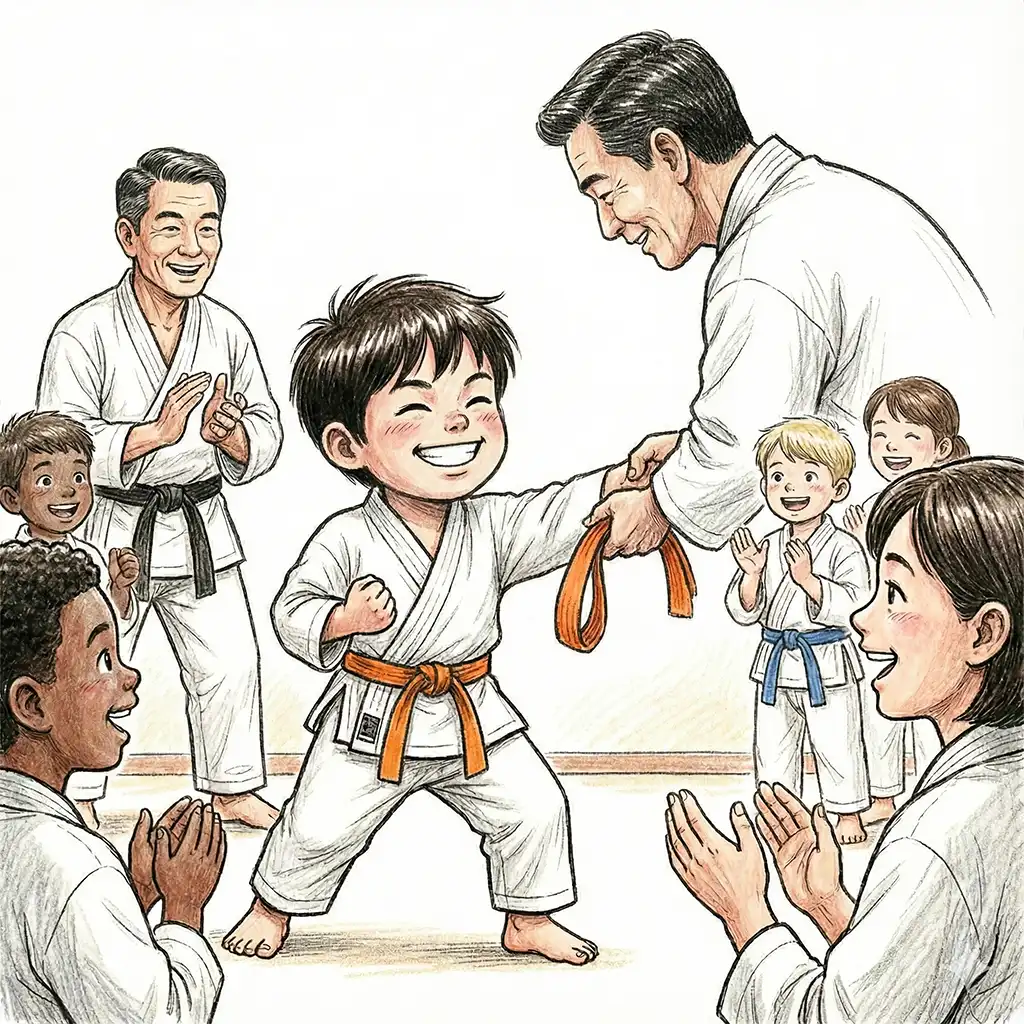
The belt system provides clear, objective markers of personal achievement. Every stripe and rank promotion reflects individual effort and mastery. Unlike team sports where benched players may never demonstrate their abilities, every karate student advances based on their own dedication. This meritocratic structure particularly appeals to children who prefer earning recognition through demonstrable competence rather than social positioning.
Self-Competition Versus Social Comparison
Martial arts philosophy emphasizes competing against your own previous performance rather than against others. Students focus on executing techniques better than yesterday, mastering kata with greater precision, developing stronger stances. This internal focus reduces the social comparison anxiety that plagues shy children in competitive team environments.
Children learn to measure success by personal growth metrics. Questions shift from "Am I better than others?" to "Am I better than I was?" This psychological reframing reduces performance anxiety and builds intrinsic motivation that sustains engagement far longer than external competitive pressure ever could.
Parents consistently report that their shy children show more willingness to attempt challenging activities after several months of karate training. The habit of measuring against personal standards rather than peer performance creates a growth mindset that transfers beyond the dojo. These children approach school projects, social situations, and new experiences with less fear of comparative judgment.
Structured Social Interaction with Clear Rules
Shy children often struggle not with social interaction itself but with the ambiguity of unstructured social situations. Playground dynamics, locker room conversations, and team huddles follow unwritten rules that introverted children may struggle to decode. The constant mental effort of figuring out appropriate behavior exhausts their social energy before they ever get to meaningful connection.
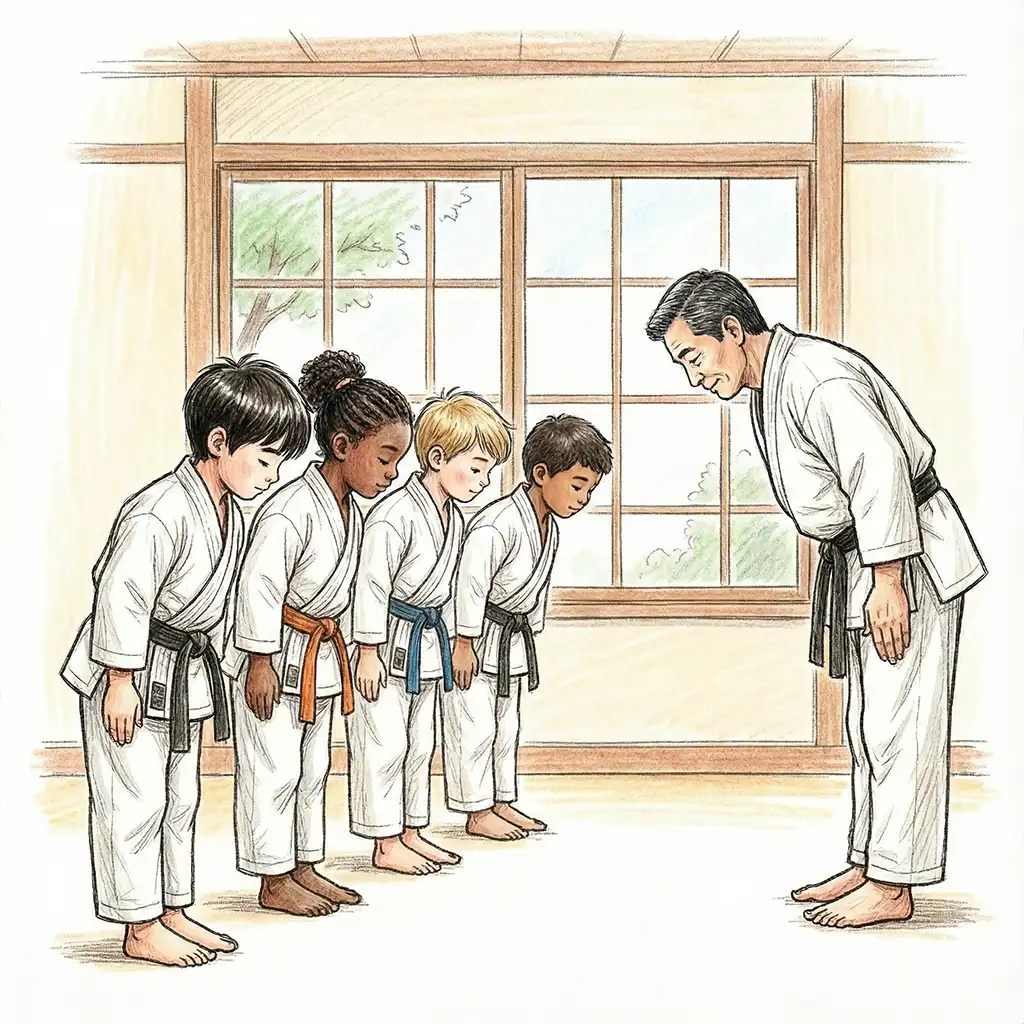
The dojo operates on explicit protocols that remove this ambiguity. Students know exactly when to bow, how to address instructors and peers, what positions to assume during class, and how to interact during partner drills. This structure provides a social script that introverted children can follow without the draining guesswork of unscripted social navigation.
Partner rotations during class create natural opportunities for brief, purposeful interactions without the pressure of initiating or maintaining open-ended conversations. Children practice techniques together, offer brief encouragement, then rotate to the next partner. These structured micro-interactions build social confidence gradually without overwhelming sensitive temperaments.
The Safety of Ritual and Routine
Traditional martial arts schools incorporate rituals that provide psychological safety for anxious children. The opening ceremony, the training sequence, the closing meditation—these predictable patterns create a sense of security that allows shy students to relax and engage. Knowing exactly what happens next reduces anticipatory anxiety that might otherwise prevent participation.
Team sports offer far less predictability. Game situations change constantly, requiring rapid social adaptation that drains introverted children. Practice sessions vary based on coach decisions and team needs. This unpredictability, while exciting for some children, creates stress for others who thrive on routine and structure.
The consistent structure of martial arts classes creates neurological benefits for anxious children. When the brain isn't constantly processing environmental uncertainty, more cognitive resources become available for learning and social connection. Shy children in structured environments often demonstrate capabilities that remain hidden in chaotic team sport settings.
Building Physical Competence Without Public Failure
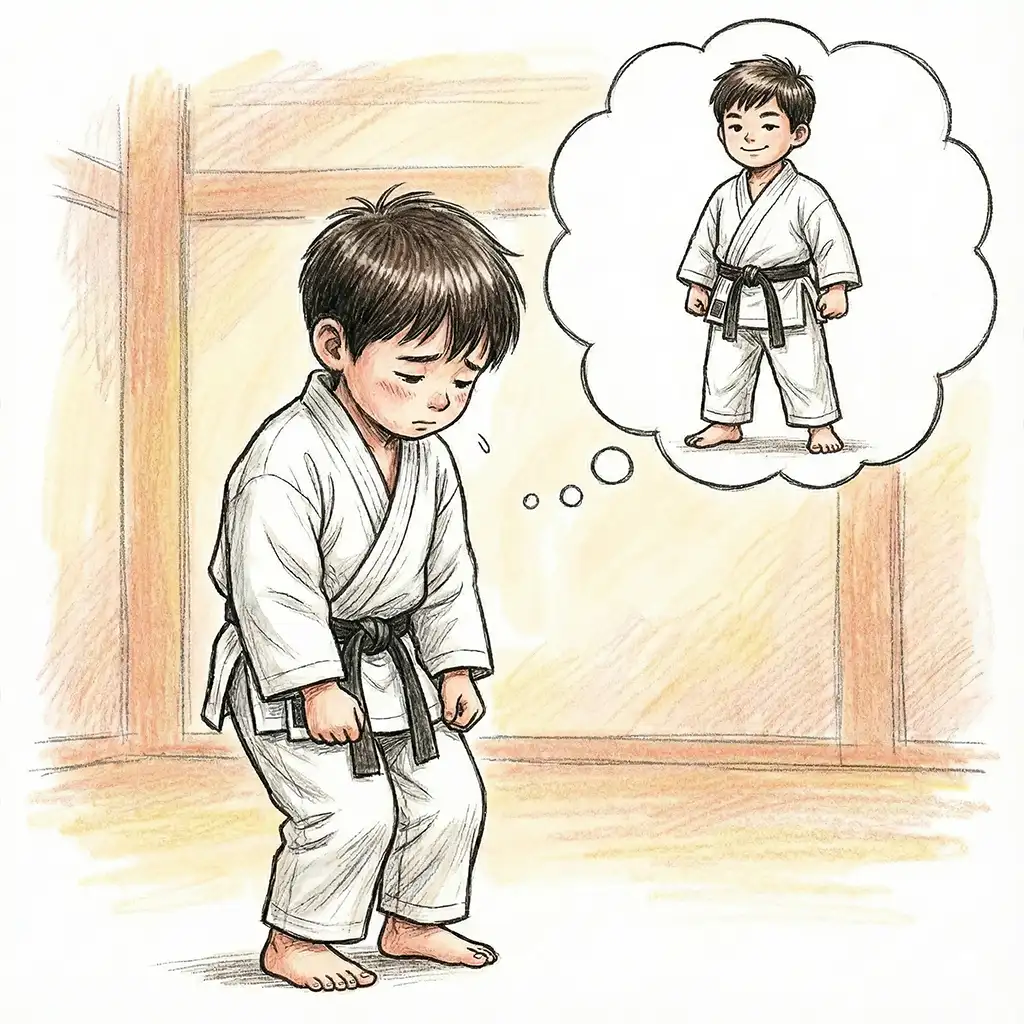
Many shy children avoid physical activities because early experiences with team sports created lasting associations between physical movement and public embarrassment. The child who struck out repeatedly, got picked last for teams, or made costly errors may have internalized a belief that physical activity leads to humiliation.
Karate provides a space to rebuild physical confidence without the audience of disappointed teammates and frustrated coaches. Students practice techniques at their own pace, receive individual corrections rather than public criticism, and demonstrate skills only when ready. Mistakes become private learning opportunities rather than public spectacles.
How karate protects shy children from public failure:
- Individual corrections delivered quietly during practice
- Belt testing scheduled when student is ready, not on team timetable
- No scoreboard displaying individual mistakes to spectators
- Progress measured against personal standards, not peer rankings
- Supportive peer culture that celebrates effort over innate talent
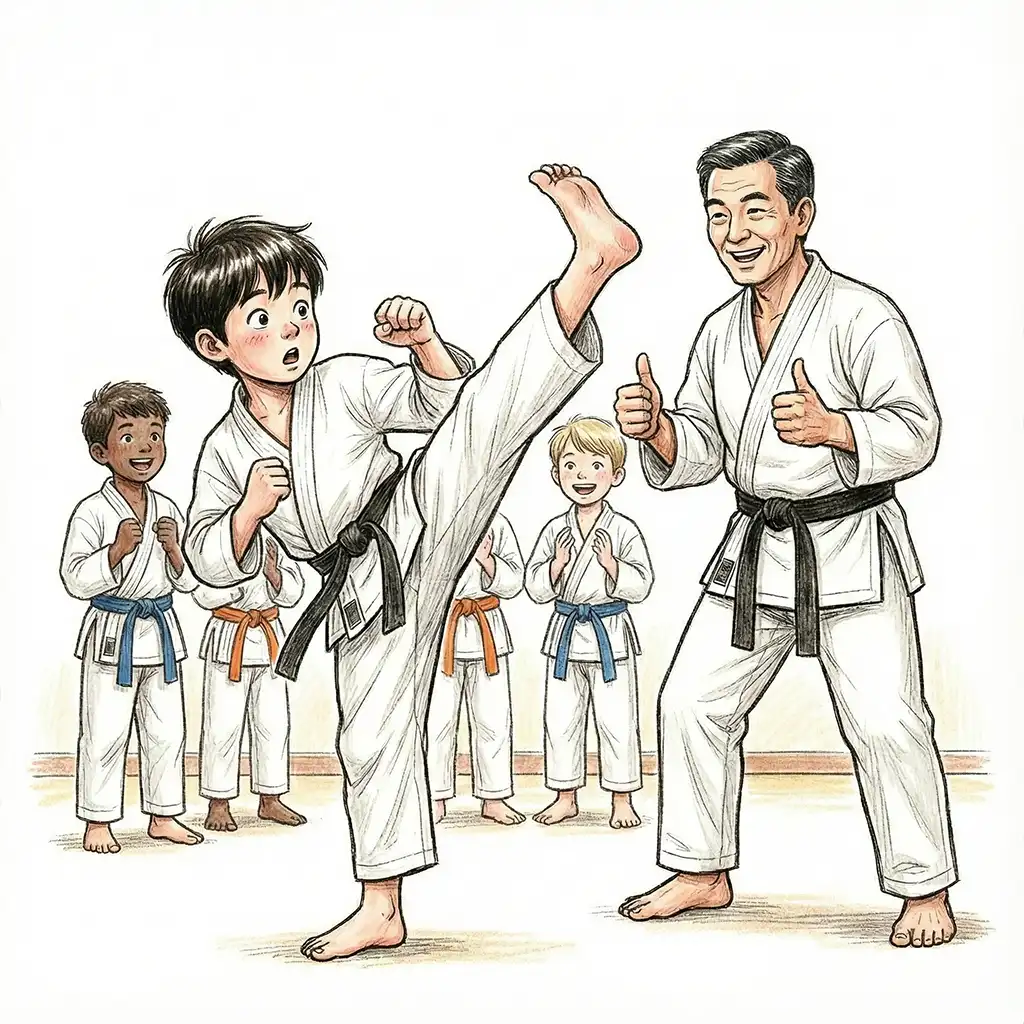
This protected environment allows shy children to take physical risks they would avoid in team settings. Trying a challenging kick, attempting a complex kata sequence, engaging in light sparring—these growth opportunities become possible when the stakes of failure remain personal rather than public.
The physical confidence gained through martial arts training often surprises both parents and children alike. Students who entered the dojo barely willing to move discover genuine athletic ability that was suppressed by social anxiety in team environments. Some eventually become instructors themselves, demonstrating techniques before dozens of students—something unimaginable when they first walked through the door.
| Confidence Milestone | Team Sports | Karate |
|---|---|---|
| First public performance | Game 1 - ready or not | Belt test when prepared |
| Recognition earned | Depends on playing time | Every student advances |
| Physical skill mastery | Position-dependent | Complete curriculum |
| Social standing | Based on athletic ability | Based on effort and rank |
Developing a Strong Voice in a Safe Environment
Shy children often speak quietly, struggle to assert themselves verbally, and may avoid speaking in groups entirely. Team sports rarely address this directly—coaches might yell for players to communicate, but provide little scaffolding for actually developing vocal confidence. The expectation to suddenly project on the field without practice creates additional anxiety.
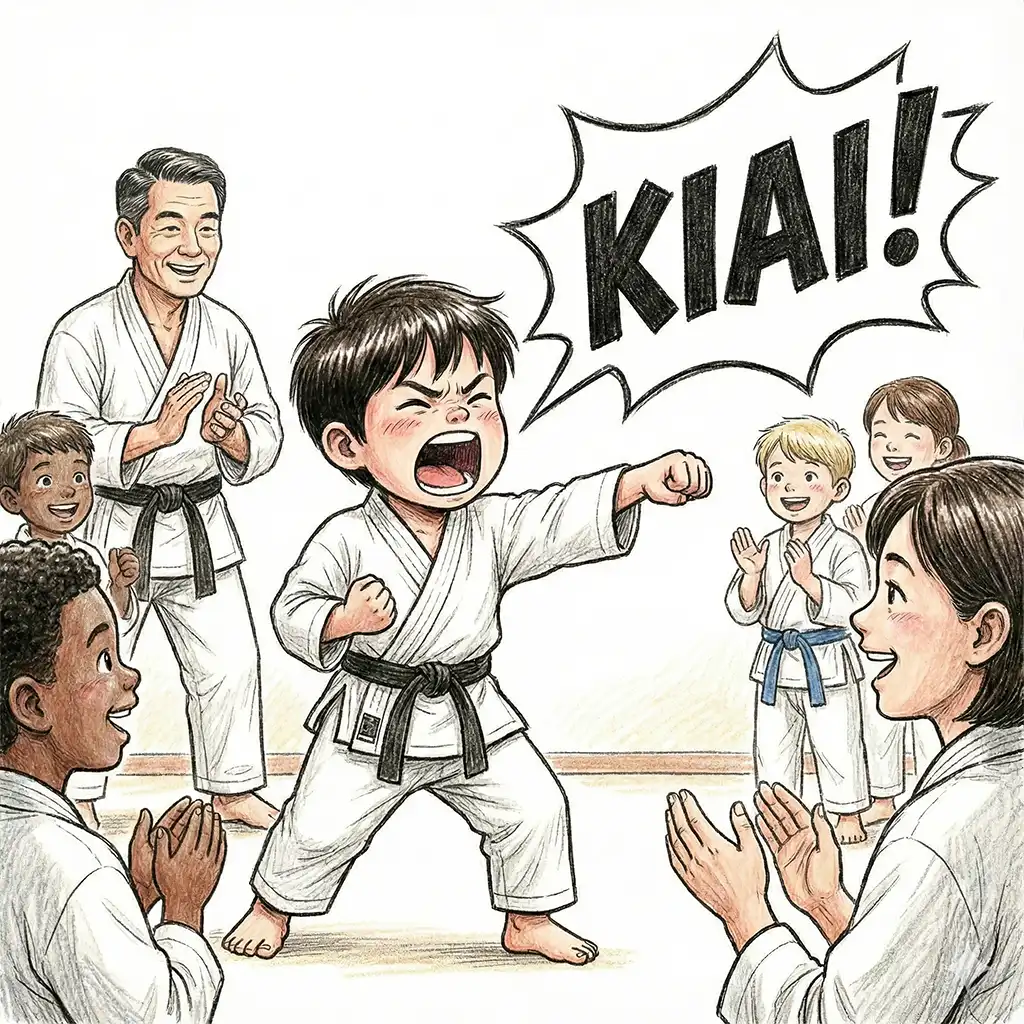
Karate training systematically develops vocal projection through required kiai—the sharp, forceful shouts accompanying techniques. Students practice projecting their voice repeatedly in every class, gradually building comfort with being heard. This structured vocal training happens within the safety of a room full of others doing the same thing. Nobody stands out for being loud because everyone practices being loud together.
The vocal confidence developed in the dojo transfers to school presentations, social situations, and professional settings later in life. Children who once mumbled develop the physical and psychological capacity to speak with authority when needed. This transformation often surprises parents who watched their child struggle to order food at restaurants.
Beyond volume, karate teaches verbal assertiveness through role-playing and self-defense scenarios. Students practice saying "No" firmly, setting boundaries verbally, and projecting confidence through tone and word choice. These verbal self-defense skills prove valuable throughout life—in negotiations, confrontations, and any situation requiring clear communication under pressure.
A Pathway to Gradual Social Integration
The paradox of trying to help shy children socialize is that forcing social exposure often backfires. Children thrust into overwhelming social situations may retreat further into isolation. Team sports, with their immediate demands for social integration, can trigger this protective withdrawal in sensitive children.
Karate allows gradual social warming at each child's natural pace. New students can focus primarily on individual practice while becoming comfortable with the environment. As familiarity increases, they naturally engage more with partners during drills. Social connections emerge organically from shared experience rather than forced team bonding activities.
This organic approach respects individual differences in social readiness. Some children open up within weeks while others need months before initiating conversations with training partners. Both timelines are perfectly acceptable in martial arts culture. There's no pressure to become the team's social butterfly or locker room entertainer.
From Wallflower to Mentor
As shy children progress through ranks, they naturally assume mentorship roles with newer students. This structured helping relationship provides a comfortable social role—one defined by competence rather than popularity. Former wallflowers discover they can lead and teach, transforming their self-concept fundamentally.
Many instructors were themselves shy children who found confidence through martial arts. They understand the journey intimately and create environments where introverted students can thrive without pressure to become someone they're not. The goal isn't to transform shy children into extroverts but to help them develop confident versions of their authentic selves.
The long-term friendships formed through years of training together often become the deepest connections shy children make. Unlike the seasonal nature of team sports friendships, dojo relationships can span decades. Training partners who struggled through belt tests together, celebrated each other's promotions, and supported one another through challenges develop bonds that outlast any sports team roster.
Making the Right Choice for Your Shy Child
Not every shy child will prefer karate to team sports, and that's fine. Some introverted children genuinely enjoy specific team activities despite their temperament. The point isn't that team sports are bad, but that karate offers advantages specifically suited to children who struggle with the social demands of group athletics.
Signs your shy child might thrive in karate over team sports:
- Previous negative experiences with team sport social dynamics
- Strong preference for one-on-one interactions over group settings
- Anxiety about letting teammates down or being judged by peers
- Preference for structured activities with clear expectations
- Interest in individual mastery rather than competitive winning
Visit potential schools with your child and observe classes together. Let them see the structured, respectful environment firsthand. Many shy children feel immediate relief when they witness the orderly, predictable nature of martial arts training compared to the chaos of team sports practices.
Trust your child's initial reactions but commit to a reasonable trial period. Some shy children need several weeks to adjust before they can accurately assess whether karate suits them. Look for signs of growing comfort rather than immediate enthusiasm—introverted children often develop deep appreciation for activities gradually rather than falling in love at first sight.
Consider schools that specifically mention working with shy or anxious children in their materials. Instructors who understand introverted temperaments create environments where sensitive children flourish rather than merely survive. The right school makes all the difference in transforming a potentially stressful activity into a source of lasting confidence.
Frequently Asked Questions
Many children who build confidence through karate later choose to try team sports from a position of strength rather than anxiety.
Most schools introduce sparring gradually and allow students to participate at their comfort level, never forcing unprepared children into contact situations.
Initially yes, but instructors understand this and allow students to build vocal confidence gradually through consistent supportive practice.
Belt tests typically include other students testing simultaneously, creating a shared experience that feels less like a solo spotlight moment.
Commit to at least six to eight weeks before evaluating, as initial discomfort typically gives way to enjoyment as familiarity with routines develops.
Many schools offer private introductory sessions to help extremely anxious children acclimate before joining group classes.